

That sharp, stabbing sensation in your heel during your first steps of the day isn’t just a morning nuisance; it’s a clear signal from your body that your foundation needs professional attention. Many Australians spend hundreds of dollars on high-end sneakers or generic gel inserts, only to find that their chronic pain persists or even worsens. The truth is that finding effective orthotics for plantar support isn’t about seeking the softest cushion available. It’s about achieving the precise structural alignment required to offload the tension on your plantar fascia and allow the tissue to heal properly.
We understand how frustrating it feels to have your daily walks or exercise routines sidelined by persistent discomfort and the confusion that comes with choosing between endless arch support levels. This guide will help you navigate the essential differences between prefabricated supports and custom-moulded devices, ensuring you find the right path to lasting relief. We will explore the clinical benefits of professional gait analysis, compare the long-term value of various support options, and provide a clear plan for restoring your mobility so you can return to the activities you love without hesitation.
Key Takeaways
- Understand how medical-grade orthoses function as specialised tools to realign foot mechanics and reduce the repetitive strain on your plantar fascia ligament.
- Compare the lifespan and corrective power of retail “chemist” insoles versus clinical custom devices crafted from high-performance materials like carbon fibre.
- Learn how professional gait analysis uses precise pressure data to design the most effective orthotics for plantar support tailored to your unique walking pattern.
- Identify the essential design features, such as deep heel cups and semi-rigid arch supports, that are required to stabilise the heel and prevent arch collapse.
- Discover how a personalised treatment plan from a qualified podiatrist can provide a higher return on investment for your long-term mobility and physical ease.
Understanding Orthotics for Plantar Fasciitis Relief
Orthoses are far more than retail insoles; they’re specialised medical devices designed to alter and improve how your feet function during movement. When we look at Understanding Plantar Fasciitis, we’re focusing on the thick band of connective tissue running along the bottom of your foot. This ligament, the plantar fascia, acts as a primary shock absorber and supports the arch. When this tissue is under excessive strain, it develops painful micro-tears and inflammation near the heel. Our clinical team focuses on identifying these specific stress points to ensure your treatment is grounded in medical precision.
Using orthotics for plantar relief focuses on a concept called “offloading”. By redistributing pressure away from the damaged area, we give the tissue the physical environment it needs to repair itself. It’s vital to remember that while orthotics provide the necessary structural foundation, they work best as part of a holistic treatment plan that includes appropriate footwear and targeted stretching programmes. This combined approach ensures we address both the symptoms and the underlying mechanical causes of your discomfort.
How Mechanical Support Reduces Fascial Tension
The way your foot moves is governed by the windlass mechanism. This mechanical process occurs when your big toe lifts, pulling the plantar fascia tight to stabilise the arch. If your foot over-pronates, which means it rolls inward excessively, the arch collapses and places immense tension on the ligament. True orthotics for plantar support provide structural integrity rather than just cushioning. While a soft foam insert might feel pleasant for a few minutes, it doesn’t stop the mechanical collapse that causes the pain. A well-designed device controls the position of the heel and supports the mid-foot, ensuring the windlass mechanism functions without overstretching the tissue. This stability is the key to preventing the recurrence of sharp heel pain.
Who Benefits Most from Orthotic Therapy?
Certain lifestyles and foot shapes place higher demands on the plantar fascia. Runners, retail workers, and healthcare professionals who spend long shifts on hard concrete floors are particularly susceptible to chronic heel pain. Individuals with specific biomechanical profiles also see significant improvements. For example, using orthotics for flat feet is a proven method to manage fascial strain. When the arch is naturally low, the fascia is constantly in a state of tension. By realigning the foot’s posture, we can reduce the daily load on the ligament and prevent the condition from becoming a long-term barrier to your mobility. This proactive approach helps you maintain an active lifestyle without the constant worry of foot fatigue.
Off-the-Shelf vs. Custom-Made: A Detailed Comparison
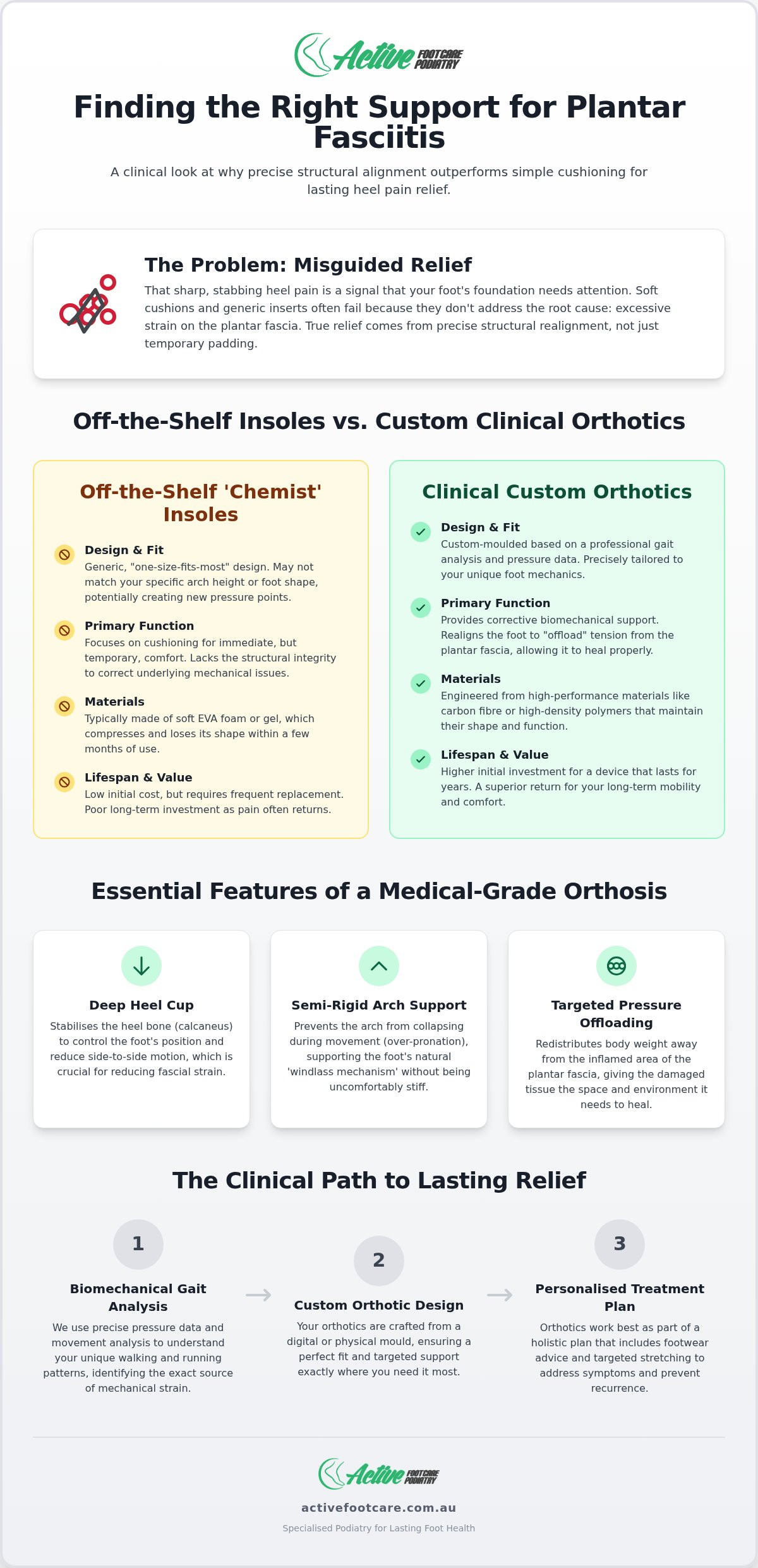
Choosing the right foundation for your recovery often starts with a choice between convenience and precision. Most Australians suffering from heel pain first turn to the local chemist for a quick fix. While retail insoles are accessible, they’re mass-produced to fit a generic foot shape that may not align with your specific anatomy. The primary issue with “one size fits most” solutions is that they assume every person with heel pain requires the same level of arch height and rigidity. If the arch is too high, it can create new pressure points; if it’s too low, it fails to provide the mechanical correction needed to offload the fascia effectively.
The difference in durability is also a major factor in the long-term success of your treatment. Generic inserts typically use soft materials like EVA foam that compress under your body weight within months. Once this compression occurs, the device no longer provides the necessary support, often leading to a return of those sharp morning steps. In contrast, clinical devices are engineered from high-performance materials like carbon fibre or high-density polymers. These materials maintain their structural integrity for years, ensuring your orthotics for plantar relief continue to function exactly as intended long after you’ve left the clinic.
The Limitations of Retail Insoles
Pharmacy brands often rely on “cushioning” to provide immediate comfort, but cushioning isn’t the same as corrective support. These products lack the depth in the heel cup required to stabilise the calcaneus (heel bone), which is essential for reducing fascial tension. There’s also a significant risk in self-diagnosing your arch type. Many people believe they have flat feet when they actually have a functional collapse that only occurs during movement. Applying a generic arch support to a complex gait issue can sometimes exacerbate foot pain by shifting the strain to other parts of the mid-foot or even the ankles and knees.
The Advantages of Clinical Custom Orthoses
Clinical custom devices are the result of a detailed diagnostic process involving 3D scanning or traditional casting. This ensures the device is a mirror image of your foot in its ideal neutral position. This level of precision allows us to add specific “apertures” or cut-outs to the frame. These features create a pocket of relief for bony prominences or particularly sensitive areas of the heel, something a retail insole simply cannot do. When evaluating the podiatrist cost, it’s helpful to view it as an investment in durability and health. While the initial commitment is higher, a single pair of custom orthoses can outlast ten pairs of retail inserts, providing a much higher return on investment for your physical ease. If you’re looking for a permanent shift in your mobility, our team can help you determine the most effective custom orthotic solution for your unique foot structure.
The Role of Biomechanical Gait Analysis in Design
Gait analysis is the scientific study of human motion; it’s the diagnostic bridge between feeling pain and achieving long-term recovery. While traditional assessments often relied on static observations, modern clinical practice uses advanced technology to map how your body moves through space. This process allows us to look beyond the heel to see how your entire kinetic chain, including your knees and hips, reacts to every step you take. We often find that heel pain is merely the final symptom of a mechanical issue occurring much further up the leg.
Using pressure plate technology, we capture thousands of data points per second as you walk. This data informs the precise shape and contour of the device, ensuring your orthotics for plantar support are built to manage your specific load requirements. By identifying compensation patterns, such as a slight limp or a hip drop, we can design a prescription that corrects the root cause of the mechanical failure. This level of detail is what allows us to create custom orthotics that feel natural and supportive from the very first day.
What Happens During a Sydney Gait Assessment?
When you visit us for a gait analysis Sydney assessment, the process is thorough and interactive. You’ll walk across a specialised pressure mat or on a treadmill equipped with high-speed cameras. This dynamic testing is crucial because your foot functions differently when it’s moving compared to when you’re just standing still. We can see exactly when your arch collapses and how much force is being slammed into your heel. These hidden biomechanical flaws are often invisible to the naked eye but are clearly revealed through digital mapping.
Translating Data into a Medical Prescription
Once we have gathered your motion data, we begin the process of translating those numbers into a physical medical prescription. We select specific shell stiffness levels based on your body weight and activity goals. A runner might require a more resilient carbon fibre shell, while someone wearing dress shoes for work might need a lower-profile polymer. We also “tune” the device to ensure it fits into common Australian footwear, from sturdy work boots to R.M. Williams. This ensures your prescription is adjusted for your lifestyle, providing the same level of protection whether you’re at the gym or in the office. This personalised approach ensures the final product isn’t just a piece of plastic, but a calibrated medical tool designed for your physical ease.
Key Features to Look for in Plantar Fasciitis Supports
Effective orthotics for plantar relief aren’t just generic inserts; they’re carefully engineered tools. A critical feature is the deep heel cup. This isn’t designed for comfort alone. It cradles the calcaneus, or heel bone, to provide essential stability. Without this, the heel rolls excessively, which pulls on the fascia and prevents healing. Semi-rigid arch support is equally vital. It needs to be firm enough to prevent mid-foot collapse during the gait cycle. If the support is too soft, it won’t hold the arch in place under your body’s full load. We also utilise medial rear-foot posting. This specialised wedge controls over-pronation, which is the inward rolling we identified as a primary cause of ligament strain. For patients with particularly thick fascial bands, we include a fascia groove. This is a recessed channel in the orthotic shell that prevents the device from pressing directly against the inflamed tissue, allowing you to walk without irritating the sensitive area.
Material Selection for 2026
The technology used in manufacturing has advanced significantly recently. We’ve seen a shift toward lightweight 3D-printed polymers. These materials offer a level of precision that traditional foams simply can’t match. In our clinical experience, shock absorption is often secondary to structural control. While a squishy feel is pleasant in the shop, it’s the rigid alignment that actually heals the micro-tears in the ligament. Given our local climate, we prioritise moisture-wicking top covers. This is essential for residents who are active in the heat, as it prevents skin irritation and extends the life of the device. These modern materials ensure your support remains effective for years rather than months.
Footwear Compatibility in Western Sydney
An orthotic is only as good as the shoe it sits in. In Western Sydney, we see a wide range of footwear needs, from industrial work boots to slimmer office shoes. We often prescribe dress orthoses for those wearing narrower styles. These are thinner but maintain the necessary corrective power. It’s helpful to use a gait analysis checklist when selecting your next pair of shoes. The shoe and the orthotic must work as a single unit. If the shoe’s heel counter is too soft, the orthotic can’t do its job properly. If you’re ready to find the perfect fit for your lifestyle, you can book a consultation with our Sydney team to discuss your specific footwear and orthotic requirements.
Tailored Foot Care Solutions at Active Footcare Sydney
At Active Footcare, our Principal Podiatrist, Dr. Maher Said, leads a clinical team dedicated to restoring physical ease through a patient-first philosophy. We believe that effective treatment isn’t just about providing a medical device; it’s about partnering with you to understand your unique lifestyle and mobility goals. Whether you visit our modern clinics in Liverpool or Bankstown, you’ll receive a thorough consultation that prioritises your comfort and long-term health. To accelerate the healing of damaged tissue, we often integrate Shockwave Therapy alongside your new orthotics for plantar support. This non-invasive technology stimulates blood flow and cellular repair in the heel, helping to resolve chronic inflammation more efficiently than using mechanical support alone.
Our clinical approach is grounded in the “Modern Traditionalist” mindset. We utilise cutting-edge diagnostic technology while maintaining the friendly, attentive service that defines a local healthcare provider. We understand that every patient’s journey is different, and we take the time to explain the methodology behind our prescriptions. By combining advanced gait analysis with traditional clinical expertise, we ensure that your treatment plan is both scientifically sound and easy to follow.
Mobile Podiatry for Moorebank and Campbelltown
For residents in Moorebank, Campbelltown, and the wider Western Sydney region who find it difficult to travel, we provide a dedicated podiatrist home visit Sydney service. This mobile care is particularly vital for our NDIS participants and senior clients with limited mobility. We conduct comprehensive home-based gait assessments using portable diagnostic tools, ensuring your foundation is properly supported without the stress of a commute. Our team is specialised in navigating NDIS requirements, making the process of obtaining custom devices seamless and straightforward for those who need them most.
Your Journey to Pain-Free Movement
Your journey toward pain-free movement continues well after you receive your new orthoses. We provide a structured follow-up and adjustment period to ensure your feet are adapting correctly to the corrected alignment. It’s common for your walking pattern to shift as your muscles strengthen; therefore, we offer precise modifications to ensure your devices remain comfortable. Long-term maintenance and regular reviews are essential to check for material wear and to confirm your prescription still matches your activity levels. If you’re currently struggling with persistent heel inside pain, we encourage you to book a consultation to see if specialised orthotics for plantar relief are the missing piece in your recovery plan. Our proactive care is designed to lead you from uncertainty toward a state of informed confidence in your foot health.
Take the First Step Toward Lasting Heel Relief
Choosing the right support is a vital investment in your daily comfort and long-term mobility. While retail inserts offer a temporary reprieve, they often fail to address the underlying biomechanical flaws that cause chronic strain. We’ve explored how professional gait analysis and precision engineering are essential for creating effective orthotics for plantar support that actually offload the damaged tissue. Our clinics in Liverpool and Bankstown, led by Principal Podiatrist Dr. Maher Said, utilise advanced 3D scanning and biomechanical analysis to ensure every prescription is perfectly calibrated to your unique movement pattern.
As a specialised provider for NDIS and aged care, we’re committed to making high-quality foot care accessible to everyone in our community. Whether you visit us in-clinic or require a mobile home visit, our goal is to provide the clinical expertise and empathetic support you need to walk without hesitation. You don’t have to manage persistent heel pain on your own. We invite you to book a gait analysis at Active Footcare Liverpool or Bankstown to begin your journey toward restoration and physical ease. We’re here to help you move with confidence again.
Frequently Asked Questions
Can I wear orthotics for plantar fasciitis in all my shoes?
Modern design makes orthoses highly versatile, but they aren’t always a universal fit for every shoe style. Most custom devices are engineered to fit into standard Australian footwear like joggers, work boots, and sturdy dress shoes. However, very slim footwear or open-toed sandals often require a specific low-profile prescription. We recommend bringing your most-worn shoes to your gait analysis to ensure the fit is seamless across your wardrobe.
Is it normal for my feet to feel sore when I first start wearing orthotics?
Yes, a mild wearing-in period is completely normal as your muscles and ligaments adapt to a corrected alignment. You might feel slight pressure in the arch or a different sensation in your calves during the first week. We typically suggest a gradual break-in schedule, starting with just two hours on the first day and increasing the time daily to allow your body to adjust to the new structural support.
How much do custom orthotics cost in Sydney in 2026?
The total investment for custom orthotics in Sydney typically depends on the complexity of your prescription and the manufacturing materials. Most clinical packages include the initial biomechanical assessment, digital 3D scanning, and the production of the devices. While industry prices vary, many patients find that the long-term durability of a custom pair provides better value than frequently replacing retail inserts that lose their support within months.
How long will my custom orthotics last before I need a new pair?
A high-quality pair of custom orthotics generally lasts between three to five years, depending on your activity levels and body weight. While the structural shell remains durable, the softer top covers may need replacing every 12 to 18 months to maintain hygiene and comfort. We recommend an annual review to ensure the prescription still matches your foot’s biomechanical needs as you age or change your exercise routines.
Do I need a GP referral to see a podiatrist for orthotics?
No, you don’t require a GP referral to book a private consultation with our podiatry team. However, if you’re seeking a Medicare rebate under a Chronic Disease Management plan, your GP must provide the necessary paperwork before your appointment. Similarly, DVA and some NDIS participants may need specific documentation to facilitate their claims for specialised orthotics for plantar relief and ensure they receive the correct funding support.
Can orthotics completely cure my plantar fasciitis?
Orthotics are a highly effective tool for managing the mechanical causes of pain, but they work best as part of a comprehensive recovery plan. By offloading the tension on the ligament, they allow micro-tears to heal properly. When combined with therapies like shockwave treatment and targeted stretching, most patients achieve long-term relief. Success depends on consistent use and addressing the inflammatory component of the condition alongside the mechanical support.
Are custom orthotics covered by private health insurance or NDIS?
Yes, most Australian private health funds provide rebates for custom orthoses if you have “Extras” cover. The amount you can claim varies significantly between providers, often ranging from $150 to $250 per pair. Additionally, the NDIS often funds orthotic therapy for participants whose mobility is significantly impacted by their foot posture, provided the service is deemed reasonable and necessary to help them achieve their specific plan goals.
What happens if my orthotics don’t feel comfortable after the first week?
If you still experience discomfort after the initial break-in period, we provide clinical adjustments to fine-tune the fit. Small changes to the shell’s flexibility or the addition of extra padding can make a significant difference to your physical ease. It’s important to return for a review rather than stopping use, as these minor tweaks ensure your orthotics for plantar support are performing exactly as intended for your unique anatomy.