


You’re walking through the Moorebank shops or heading to a meeting in Campbelltown when a sharp, stabbing sensation pierces your foot, making every step feel like you’re treading on a jagged pebble. You check your shoe, but there’s nothing there. The culprit is a small, hardened patch of skin that has turned a simple stroll into a painful ordeal. It’s incredibly frustrating when your own body seems to work against you, and we understand how embarrassing it can feel to show thickened, yellowed skin during a weekend at the beach or a visit to the local pool.
You might have tried chemist-bought plasters or “miracle” files, only to find the discomfort returns within weeks, often feeling worse than before. This guide provides a professional roadmap to effective corns and calluses treatment, showing you how to achieve immediate relief while addressing the underlying biomechanical reasons why this skin keeps thickening. We’ll explore the latest clinical methods used in 2026, from precision debridement to custom orthotics, ensuring you can walk through Sydney pain-free and with renewed confidence.
Key Takeaways
- Learn how your body uses hyperkeratosis as a protective shield and identify whether you are suffering from a broad callus or a specific type of painful corn.
- Discover why professional corns and calluses treatment using sterile clinical tools provides painless, immediate relief without the infection risks of “bathroom surgery.”
- Understand why removal is only 50% of the solution and how pressure offloading techniques stop thickened skin from growing back.
- Explore how professional gait analysis identifies the mechanical “hot spots” in your walk that trigger painful skin lesions.
- Access expert podiatry care in Liverpool, Bankstown, and Campbelltown, including the option for professional home visits for those with limited mobility.
Understanding Corns and Calluses: More Than Just Thickened Skin
Most people view a patch of hard skin as a simple nuisance. However, your skin is actually performing a remarkable feat of self-preservation. When you seek corns and calluses treatment, it’s helpful to understand that this thickening, known clinically as hyperkeratosis, is your body’s attempt to shield delicate underlying tissues from excessive pressure. It is a survival mechanism gone into overdrive. While your skin intends to protect you, the resulting build-up often creates the very discomfort you’re trying to avoid.
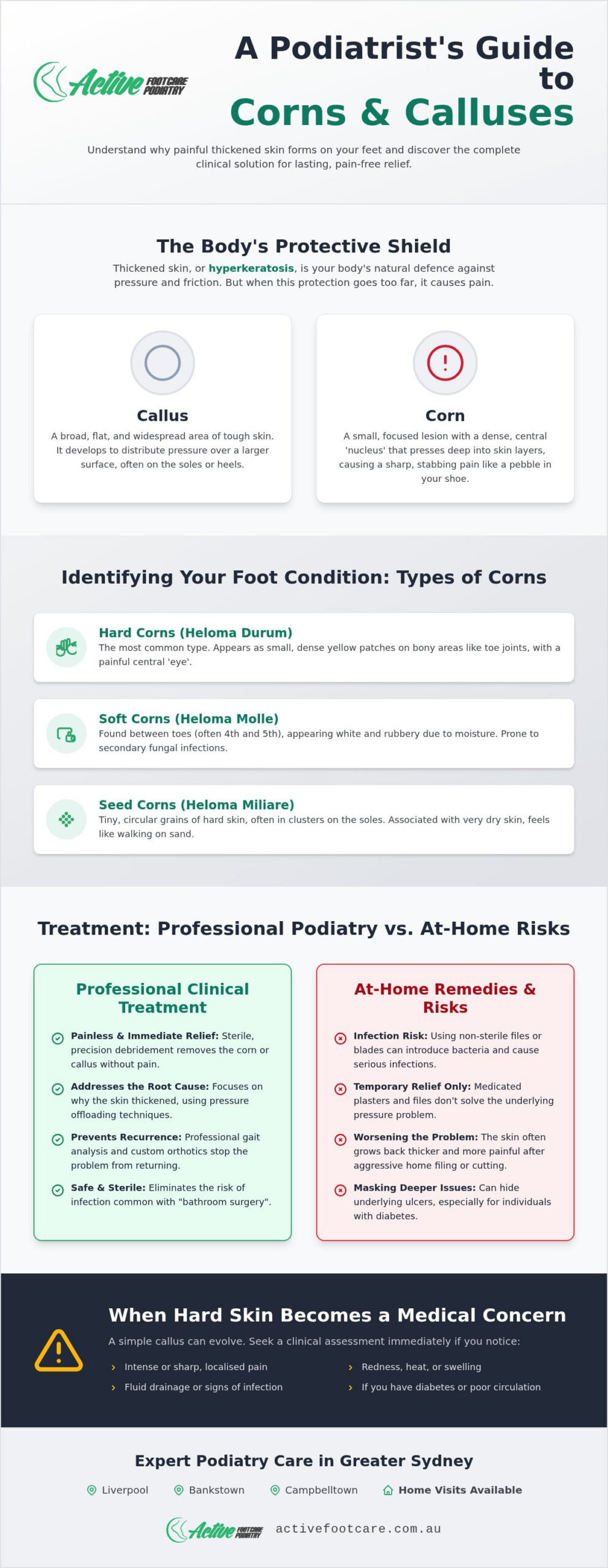
Calluses are typically broad, flat areas of toughened skin that develop on the soles of the feet or the heels. They spread out to distribute weight across a larger surface area. Corns, by contrast, are smaller and more concentrated. They possess a dense, centralised “plug” or nucleus of keratin that presses deep into the layers of the skin. This nucleus acts like a tiny spike, creating that agonising “pebble in the shoe” sensation every time you take a step on the pavements of Liverpool or Moorebank.
The Mechanical Cause: Why Your Skin is Protecting Itself
Our feet endure immense forces with every stride. Friction occurs when the skin rubs against a shoe, while shearing forces happen when the skin is pulled in different directions during the gait cycle. Ill-fitting footwear or prominent bone structures, such as bunions or hammer toes, often create these high-pressure zones. Mechanical stress is the primary driver of callus formation. When these forces remain constant, the skin has no choice but to thicken in an attempt to survive the daily grind. Without addressing these mechanics, even the best corns and calluses treatment will only provide temporary relief.
When ‘Hard Skin’ Becomes a Medical Concern
A small callus might start as a cosmetic annoyance, but it can quickly evolve into a clinical pathology. If left unmanaged, the intense pressure from a corn can cause inflammation or even lead to bursitis, which is the painful swelling of the fluid-filled sacs near your joints. We often see patients who have waited too long, allowing the pressure to break down the healthy tissue beneath the hard skin.
For many residents in Greater Sydney, particularly those managing diabetes or poor circulation, thickened skin is far from trivial. A deep corn can mask an underlying ulcer, making professional intervention essential to prevent serious infections. Gaining a deeper perspective on Understanding Corns and Calluses helps you recognise when your body’s protective response has become a health risk. If you notice redness, heat, or fluid drainage around an area of hard skin, it’s time to move beyond home remedies and seek a clinical assessment.
Identifying Your Foot Condition: Different Types of Corns
Identifying the specific type of lesion is the first step toward effective corns and calluses treatment. While all corns stem from pressure and friction, their presentation and the way we manage them in a clinical setting vary significantly. Recognising these differences helps us tailor a plan that doesn’t just remove the skin, but addresses why it formed in that specific spot, whether you’re walking the streets of Liverpool or Moorebank.
Hard Corns vs. Soft Corns
Hard corns, or heloma durum, are the most frequent type we encounter at our clinics. These usually develop on the bony joints of the toes where footwear rubs most aggressively. They appear as small, yellow or grey patches with a clearly defined, dense centre known as the “eye.” This eye is the focal point of pressure that causes that sharp, concentrated pain. When we examine these in the clinic, we look for this centralised plug to ensure we can remove it precisely and provide immediate relief.
Soft corns, known as heloma molle, have a completely different appearance. They usually sit between the fourth and fifth toes and have a white, rubbery, or damp look. This happens because the skin is constantly exposed to sweat and moisture trapped between the toes. This damp environment makes soft corns particularly vulnerable to secondary fungal infections. If left untreated, the skin can break down further, leading to significant discomfort and a higher risk of infection in the web spaces of your toes.
The Painful Reality of Seed Corns and Neurovascular Corns
Seed corns (heloma miliare) present as tiny, circular grains of hard skin, often appearing in clusters on the soles of the feet. Unlike hard corns, these are frequently associated with very dry skin rather than just direct pressure. They can feel like walking on small seeds or grains of sand, making every step uncomfortable.
Neurovascular corns represent a more serious clinical category. In these cases, the body has responded to chronic pressure by allowing tiny nerves and blood vessels to grow into the corn itself. These lesions are intensely painful to the touch and can bleed easily if they are disturbed. Because of the involvement of live tissue, they require expert care to manage safely. Seeking Professional Corns and Calluses Treatment is the safest way to address these complex conditions without the risk of injury. If you are unsure which type of corn is causing your discomfort, our team can provide a thorough assessment of your foot health to determine the best path forward and restore your mobility.
Professional Corns and Calluses Treatment vs. At-Home Risks
Many people feel a sense of embarrassment about their feet and resort to “bathroom surgery” with nail clippers or kitchen scissors. This approach is fraught with danger, as non-sterile tools can easily lead to deep-tissue infections. In contrast, a podiatrist performs debridement using surgical-grade, single-use scalpel blades. This allows for the precise removal of dead skin without affecting the healthy tissue beneath. It’s a painless process that provides the “walk-out” relief many patients have been seeking for months.
The Dangers of Medicated Corn Plasters
While they are readily available in chemists across Sydney, medicated corn plasters carry hidden risks. These products typically contain salicylic acid in concentrations ranging from 12% to 40%. The problem is that the acid cannot distinguish between the hardened corn and your healthy, surrounding skin. This often results in painful “acid burns” and maceration, where the skin becomes white and soggy. This damage creates a perfect entry point for bacteria, leading to secondary infections that require medical intervention.
For our patients managing diabetes, these plasters are particularly dangerous. Because diabetes can affect both circulation and sensation, you might not feel the acid burning through your skin until a significant wound has formed. These chemical burns can quickly develop into foot ulcers, which are difficult to heal and pose a serious risk to your overall foot health. We strongly advise against these “quick fixes” in favour of a professional assessment focused on Preventing Recurrence and maintaining skin integrity.
Clinical Debridement: What to Expect at Active Footcare
When you visit Active Footcare, our approach is methodical and patient-focused. We begin with a thorough assessment of your foot mechanics to understand why the lesion formed. We then use professional-grade softening agents to prepare the skin. Using a gentle, paring technique, we remove the thickened layers and, crucially, extract the deep nucleus of the corn. This is the part that home filing often misses, which is why the pain usually returns so quickly after at-home attempts.
Finally, we smooth the area with a clinical buffing tool and apply high-potency, urea-based emollients. These professional creams penetrate deeper than standard moisturisers to keep the skin supple and resilient. This comprehensive corns and calluses treatment ensures you leave the clinic feeling as though you’re walking on air, with a clear plan to keep the discomfort from returning. Our goal is to restore your comfort while ensuring your long-term foot health is never compromised by risky home remedies.
Preventing Recurrence: Beyond the Initial Debridement
Clearing away hardened skin provides immediate comfort, but it’s only half the battle. If we don’t change the underlying mechanics that caused the lesion, your body will simply restart its protective response. A comprehensive corns and calluses treatment must include a plan to redirect the forces hitting your feet. We use professional gait analysis to map out “hot spots” where pressure is highest during your walk. By identifying these areas, we can understand exactly why a corn keeps returning to the same toe or why a callus persists on your heel despite regular filing.
Digital scanning technology allows us to create a precise map of your foot’s architecture. This data is vital for designing corrective measures that actually work. We don’t just guess where the pressure is; we see it in the data. This scientific approach ensures that our recommendations are based on your unique movement patterns rather than general assumptions. By realigning how your foot interacts with the ground, we can significantly reduce the mechanical stress that triggers skin thickening.
The Role of Custom Orthotics
For many of our patients in Bankstown and Campbelltown, custom orthotics are the key to long-term relief. Unlike generic, chemist-bought inserts that offer basic cushioning, these are tailor-made to redistribute weight away from your specific lesions. Whether you’re dealing with the instability of flat feet or the concentrated pressure points of high arches, these devices stabilise your foot during the gait cycle. This reduction in friction and shearing forces stops the skin from needing to protect itself, effectively ending the cycle of thickening.
Footwear Advice for the Sydney Climate
Your choice of shoes is especially important during the sweltering Sydney summer. Heat causes feet to swell, which turns a slightly snug shoe into a source of intense friction. We recommend choosing footwear with a generous toe box to prevent toes from being squeezed together, a common cause of painful soft corns. Always check for internal seams or rough stitching that might rub against bony joints. If your job requires formal wear, we can advise on styles that balance a professional appearance with the room your feet need to breathe and move without restriction.
Addressing the root cause is the only way to ensure your feet stay healthy and pain-free for the long term. If you’re tired of the same painful spots returning every few months, we can help you organise a comprehensive gait analysis to find a permanent solution and restore your walking comfort.
Expert Podiatry Care in Liverpool, Bankstown, and Greater Sydney
We believe that everyone deserves to walk without the constant distraction of a stinging corn or a burning callus. At Active Footcare, our mission is to provide a seamless blend of clinical authority and empathetic reassurance. Led by Principal Podiatrist Dr. Maher Said, our team understands that foot pain isn’t just a physical issue; it’s a barrier to your independence and quality of life. We’ve built our practice on the values of a “Compassionate Expert,” ensuring that every patient feels understood and supported rather than just diagnosed. Whether you visit our clinics in Liverpool or Campbelltown, you’ll find a professional environment dedicated to your long-term mobility.
Mobile Podiatry: Bringing the Clinic to Your Doorstep
For many residents in Moorebank or Bankstown, particularly our senior community members, getting to a clinic can be a challenge. We’ve solved this by offering a comprehensive mobile podiatry service that brings the full clinical experience to your home. We don’t believe that limited mobility should mean a lower standard of corns and calluses treatment. Our podiatrists arrive with all the necessary sterile, single-use equipment to perform a complete debridement safely and comfortably in your own living room. This service is a vital part of our podiatry services for aged care, designed to keep our older neighbours active and pain-free without the stress of a commute.
NDIS Podiatry Providers in Western Sydney
Active Footcare is a registered NDIS provider, and we’re dedicated to helping participants across Greater Sydney maintain their foot health and independence. Routine corns and calluses treatment is often a core component of a broader NDIS management plan, as it prevents the skin breakdown that can lead to more serious complications. We also provide clinical support for DVA cardholders, honouring their service with the highest level of professional care. Our team is highly experienced in the administrative side of these programs, making the process of booking and managing your funded consultations as simple as possible.
If you’re tired of living with the “pebble in the shoe” sensation, our team is ready to help you rediscover the joy of pain-free walking. We’ll work with you to find the root cause of your discomfort and create a personalised plan to keep it from returning. Contact Active Footcare today for a consultation and take the first step toward a more comfortable, active lifestyle in 2026.
Step Toward Pain-Free Mobility and Lasting Comfort
Your journey toward comfortable, pain-free walking doesn’t have to be a solo effort. We’ve explored how understanding the mechanical cause of your discomfort is just as important as the physical removal itself. By moving away from risky at-home methods and embracing a clinical approach, you ensure your feet remain healthy and resilient. Professional corns and calluses treatment offers more than just immediate relief; it provides a roadmap to prevent these painful lesions from ever returning to your life.
Whether you visit our clinic or require the convenience of a mobile home visit in Liverpool or Bankstown, our team is dedicated to your well-being. As an NDIS registered provider led by the expertise of Dr. Maher Said, we pride ourselves on delivering care that is as thorough as it is compassionate. You don’t need to endure the stinging pain of a corn for another day. We invite you to Book Your Professional Footcare Consultation in Sydney Today and rediscover the ease of movement you deserve. Your path to better foot health starts with a single, informed step. We look forward to helping you walk with confidence again.
Frequently Asked Questions
Can I permanently remove a corn at home?
Permanent removal at home is rarely successful because over-the-counter tools only shave the surface layers of skin. The deep-seated nucleus, or the “eye” of the corn, remains embedded in the tissue. Attempting “bathroom surgery” with clippers or scissors in Moorebank homes often leads to infection or injury. Professional debridement is required to safely extract the core and address the mechanical pressure that caused the corn to form initially.
Is corn removal painful when done by a podiatrist?
Corn removal performed by a qualified podiatrist is typically a painless procedure. Because corns and calluses are composed of dead skin cells, they lack nerve endings. We use sterile, single-use scalpel blades to gently pare down the thickened skin without affecting the healthy tissue beneath. Most patients in our Bankstown and Liverpool clinics report immediate relief and a significant reduction in pressure as soon as the centralised plug is removed.
Does Medicare or NDIS cover corns and calluses treatment?
Financial support is available for many Sydney residents through various schemes. Medicare provides a rebate for corns and calluses treatment if you have a chronic condition and a GP Management Plan. Additionally, Active Footcare is a registered NDIS provider, meaning participants can use their funding for routine foot care to maintain mobility. We also support DVA cardholders. Our team can help you understand your eligibility during your initial consultation or mobile home visit.
How often should I see a podiatrist for callus management?
The frequency of visits depends on how quickly your skin thickens and your daily activity levels. For most patients in Campbelltown or Liverpool, a maintenance appointment every six to ten weeks is ideal to prevent discomfort. If you have underlying conditions like diabetes or poor circulation, more frequent monitoring is essential. We’ll assess your skin quality and gait to recommend a personalised schedule that keeps your feet comfortable and prevents lesions from returning.
What is the difference between a corn and a plantar wart?
While they look similar, corns and plantar warts have different causes. Corns are purely mechanical, caused by friction and pressure. Warts are a viral infection and often feature tiny black dots, which are clotted blood vessels. A corn is typically painful when pressed directly, whereas a wart hurts more when squeezed from the sides. Our podiatrists use clinical diagnostic techniques to ensure you receive the correct treatment for your specific condition.
Can wearing the wrong socks cause calluses?
Yes, socks play a significant role in foot health. Socks with thick, internal seams or those made from non-breathable materials can increase friction against your toes and heels. In the Sydney heat, moisture build-up from poor-quality socks can soften the skin, making it more prone to shearing forces and callus formation. We often recommend moisture-wicking, seamless socks for our patients in Moorebank to reduce the mechanical stress that leads to thickened skin.
Are corns hereditary or caused by my walking style?
Corns aren’t strictly hereditary, but the foot structure you inherit can make you more susceptible. If you have naturally high arches or flat feet, your walking style will create specific “hot spots” of high pressure. This biomechanical stress is what triggers the skin to thicken. By performing a professional gait analysis, we can identify these movement patterns and use custom orthotics to redistribute your weight, effectively neutralising the inherited factors that cause corns.
What happens if I leave a painful corn untreated?
Ignoring a painful corn can lead to serious complications beyond simple discomfort. The constant pressure can cause the tissue beneath the corn to break down, leading to an ulcer or a deep-seated infection. In some cases, a fluid-filled sac called a bursa may form under the lesion, causing intense inflammation. For our diabetic patients in Greater Sydney, an untreated corn is a major risk factor for foot wounds that are difficult to heal.