


What if the secret to achieving your NDIS mobility goals isn’t hidden in a thick policy manual, but starts with the health of your feet? For many participants in Western Sydney, using this ndis podiatry funding guide helps clear the fog surrounding the 2026 NDIS landscape, which often feels more like a maze of technical jargon than a support system. It’s a common frustration to feel uncertain about whether custom orthotics fall under Capital Supports or if home visits fit within Improved Daily Living. You’re not alone in worrying that a lack of clarity might stand between you and the professional care you need to stay active.
We’ve designed this resource to replace that uncertainty with clinical confidence and practical steps. We’ll help you understand the latest 2026-27 pricing schedule, including the restructured billing items and the current $188.99 hourly rate for podiatry services. By the end of this guide, you’ll have a clear roadmap for your next plan review, a firm grasp on how to justify “reasonable and necessary” supports, and the knowledge to secure the right foot care to improve your daily mobility and comfort.
Key Takeaways
- Learn how to correctly categorise your clinical care within the NDIS budget pools to ensure therapy and orthotics are appropriately funded.
- Discover how detailed gait analysis and custom-made orthotics can be justified as reasonable and necessary supports to improve your physical mobility.
- Use this ndis podiatry funding guide to understand the 2026 pricing changes and gather the right evidence for your next plan review.
- Find out how to access specialised NDIS podiatry services through registered providers in Western Sydney, including the option for professional home visits.
- Gain a clear roadmap for navigating the NDIS “reset” while maintaining the foot health supports essential for your independence and community participation.
Understanding Podiatry within the NDIS Framework
Podiatry is far more than just “foot care” within the National Disability Insurance Scheme (NDIS); it’s a vital health support that directly impacts your ability to move safely through the world. For many, a podiatrist is the primary specialist responsible for managing complex biomechanical issues that arise from physical or neurological disabilities. When we look at how to use this ndis podiatry funding guide, we start by recognising that the NDIA views these services as tools for building independence. If a foot condition prevents you from attending work, visiting friends, or completing daily tasks, it becomes a core concern for your plan. Our team at Active Footcare acts as your partner in this process, ensuring your clinical needs are clearly translated into your mobility goals.
Is Podiatry Covered by the NDIS?
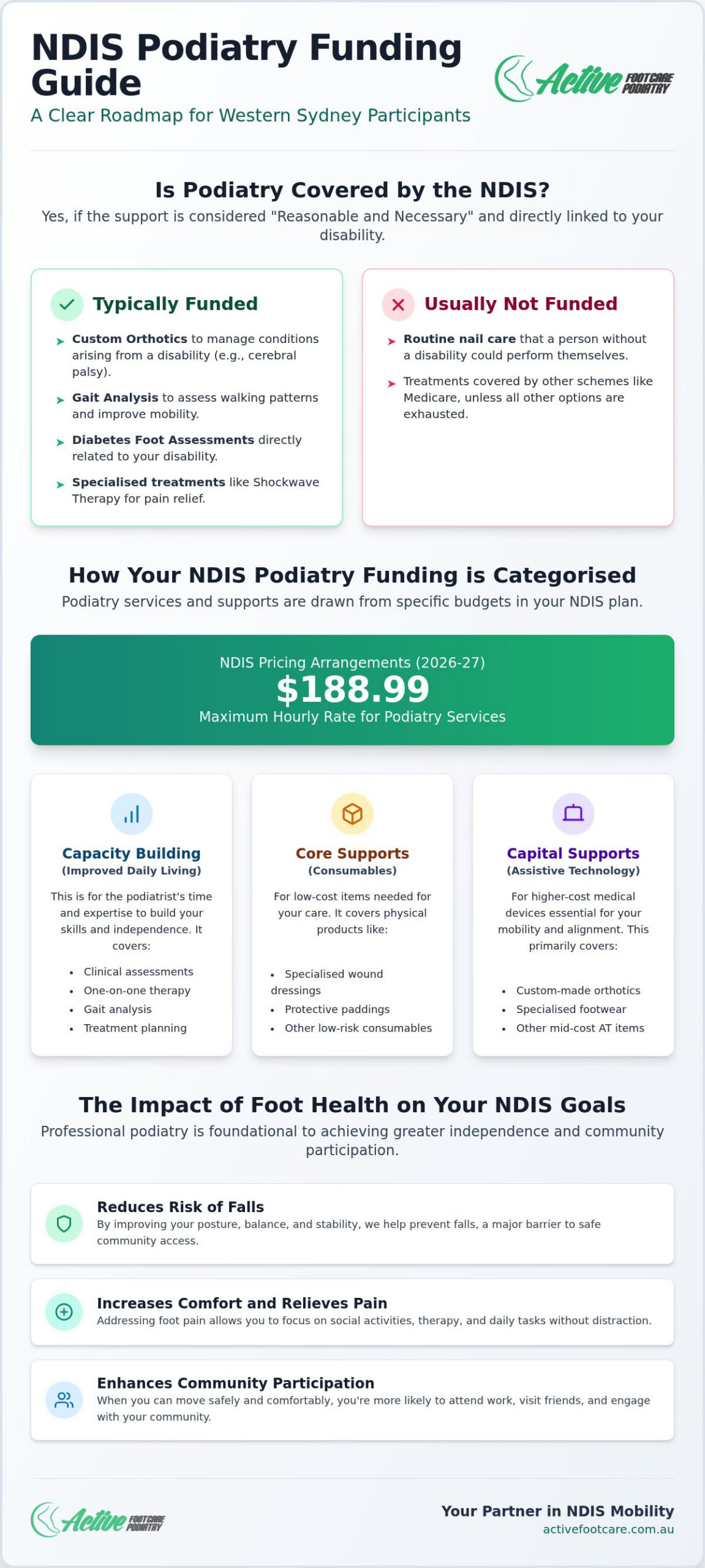
The short answer is yes, provided the support meets the “reasonable and necessary” criteria. The NDIA looks for a direct link between your disability and the need for podiatry. For instance, if you require a Diabetes Foot Assessment or Custom Orthotics to manage a condition like cerebral palsy or peripheral neuropathy, these are typically funded. It’s different from a Medicare Chronic Disease Management plan, which is often limited to five sessions per year. NDIS funding is designed to be more flexible, focusing on long-term outcomes rather than just short-term treatment. However, the agency usually won’t fund routine nail care that a person without a disability could reasonably do themselves, unless your specific condition makes this impossible or dangerous to perform alone.
The Impact of Foot Health on Mobility Goals
Your feet are the foundation of your entire body’s alignment. Professional intervention like a Gait Analysis allows us to see exactly how your feet interact with the ground, identifying issues that might lead to secondary complications like knee or back pain. By improving your posture and stability, we significantly reduce the risk of falls, which is a major barrier to community participation. Whether it’s through Shockwave Therapy for pain relief or the precision of custom-moulded supports, the goal is always physical ease. When you aren’t distracted by foot pain, you’re more likely to engage in social activities, attend therapy sessions, and maintain the active lifestyle your NDIS plan aims to support. We focus on these outcomes to ensure you feel stable, supported, and ready to take on your day.
How NDIS Podiatry Funding is Categorised
Understanding where your funding originates is a vital step in this ndis podiatry funding guide. The NDIS organises budgets into three primary pools: Core, Capacity Building, and Capital. Each category serves a distinct purpose in your care journey. As of July 2026, the NDIS Pricing Schedule has standardised how practitioners bill for their time. The maximum hourly rate for podiatry is now $188.99. This rate covers six specific support item numbers, which include direct clinical service, telehealth, and even the time your podiatrist spends writing the reports required by the NDIA. By categorising these services correctly, you ensure your plan remains sustainable throughout the year.
Capacity Building: Improved Daily Living
This is the most common category for podiatry therapy. It’s designed to help you build the skills and physical capacity needed to live more independently. Clinical assessments, one-on-one therapy sessions, and training on how to manage your foot health all sit within this budget. If you require a professional gait analysis to identify walking patterns that cause pain, the hours are drawn from your Improved Daily Living allocation. Our practitioners use these hours to develop tailored treatment plans that align with your broader NDIS goals. This ensures every minute of care contributes to your long-term mobility and comfort.
Core Supports: Consumables and Assistive Technology
While Capacity Building pays for the podiatrist’s expertise, Core and Capital budgets often cover the physical items you need. Core Supports typically handle low-cost consumables, such as specialised wound dressings or protective paddings. However, more significant interventions like custom orthotics generally fall under Assistive Technology (AT). The Australian Podiatry Association emphasises that these medical devices are essential for correcting alignment and preventing secondary complications. In 2026, mid-cost AT items usually require a formal quote and clinical justification from your podiatrist. We handle this documentation for you, ensuring the NDIA understands why a specific device is reasonable and necessary for your physical stability.
If you’re feeling uncertain about which budget pool applies to your specific needs, the team at Active Footcare can review your plan and help clarify your available allocations during your next visit.
Eligible NDIS Podiatry Services and Supports
Identifying which specific treatments are covered is a central part of using this ndis podiatry funding guide to your advantage. While the previous sections explained how budgets are structured, this section focuses on the clinical interventions that keep you moving. At Active Footcare, we provide a wide range of disability-related health supports, starting with comprehensive biomechanical and gait assessments. These evaluations aren’t just about looking at your feet; they’re about understanding how your entire lower limb functions during movement. For participants experiencing heel inside pain or other chronic discomfort, these assessments are the first step toward a personalised treatment plan that restores physical ease.
According to the Official NDIS Podiatry and Foot Care Guidelines, the scheme prioritises supports that reduce the functional impact of a disability. This includes specialised neurovascular assessments for participants with diabetes, where we monitor circulation and nerve function to prevent serious complications. By proactively managing these risks, we help you maintain your independence and avoid secondary health issues that could limit your community participation.
Custom Orthotics and Medical Devices
We believe that your mobility aids should be as unique as your gait. While off-the-shelf inserts might offer temporary cushion, custom-made orthotic devices are precision-engineered to correct alignment and redistribute pressure. Our design process involves detailed digital scanning to ensure every contour of your foot is supported. This level of customisation is particularly important for participants with complex physical needs, as it provides superior stability and long-term relief compared to generic options. The NDIS typically funds the maintenance and replacement of these devices when your functional needs change or the equipment reaches the end of its clinical lifespan, which is often every two years.
Advanced Clinical Treatments
Our clinic utilises modern methodologies to address persistent pain and tissue damage. For participants with chronic musculoskeletal conditions, we may incorporate prolotherapy for foot pain or shockwave therapy into your care plan. These regenerative treatments are designed to stimulate the body’s natural healing processes, offering a path to improvement without invasive surgery. We also specialise in high-risk wound care and diabetic ulcer prevention, ensuring that small issues don’t escalate into significant mobility barriers. Each of these advanced treatments is delivered with the same empathetic reassurance that defines our practice, ensuring you feel supported at every stage of your recovery journey.
Securing and Managing Your Podiatry Funding
Securing the support you need requires a proactive approach to evidence gathering before your next planning meeting. This ndis podiatry funding guide emphasises that the NDIA makes decisions based on the functional impact of your disability. A Functional Capacity Assessment (FCA) is often the starting point, as it provides a comprehensive overview of how your physical condition affects your daily life. When you prepare for a reassessment, it’s helpful to document specific instances where foot pain or limited mobility has prevented you from engaging in the community. By presenting clear, lived experience alongside clinical data, you create a compelling case for why podiatry is a reasonable and necessary inclusion in your plan.
Your Support Coordinator can be a valuable ally in this process. They help you prioritise your various health needs and ensure that foot health isn’t overlooked in favour of more visible therapies. We often collaborate with coordinators to explain how a stable physical foundation through proper foot care actually enhances the effectiveness of other supports, such as physiotherapy or exercise physiology. This holistic view helps the NDIA see podiatry as an investment in your overall independence.
The Importance of Clinical Reports
Clinical evidence is the language of the NDIS. When our practitioners write a report, we don’t just list symptoms; we link our findings directly to your stated goals. If your goal is to walk to the local shops independently, we explain how specific interventions like a Diabetes Foot Assessment or Shockwave Therapy reduce the risks that currently stop you. We use precise terminology to describe your gait and biomechanics, providing the technical justification the agency requires. A strong report from a podiatrist is the primary tool for securing AT funding. This document acts as a bridge between your physical needs and the administrative requirements of the scheme, ensuring nothing is left to chance.
Choosing the Right Management Type
How you manage your funds dictates which providers you can see and how invoices are handled. There are three main options available to participants:
- Self-managed: You have the most flexibility and can choose any podiatrist, regardless of their registration status. You pay the provider directly and then claim the funds back from the NDIS portal.
- Plan-managed: A dedicated plan manager handles the financial side, paying invoices on your behalf. This allows you to choose any provider while removing the administrative burden.
- Agency-managed: The NDIA manages your funds, meaning you must choose an NDIS registered provider. Active Footcare is a registered provider, which means we meet the strict quality and safety standards set by the NDIS Commission.
If you’re ready to gather the evidence needed for your next plan review, you can schedule your NDIS podiatry assessment with our clinical team today.
Accessing NDIS Podiatry in Western Sydney
Choosing a local NDIS registered provider is about more than just proximity; it’s about finding a team that understands the Western Sydney community and the specific challenges faced by local participants. Led by Dr. Maher Said, our clinical team at Active Footcare operates across Liverpool, Bankstown, and Moorebank. We focus on creating a reliable partnership with our patients, ensuring that every diabetic foot assessment or custom orthotic fitting is delivered with clinical precision and empathetic care. By choosing a provider within your own neighbourhood, you benefit from a specialist who is easily accessible for follow-up care and the ongoing maintenance of your assistive technology.
Mobile Podiatry: Care at Your Doorstep
For many participants, travelling to a clinic can be a significant barrier to receiving consistent care. This is why podiatrist home visits in Sydney are such a vital component of our service offering. Our mobile podiatry services bring the full capability of a modern clinic directly to your home. During a home-based consultation, we perform the same thorough assessments and treatments you’d expect in-clinic, including gait analysis and wound management. Our mobile team covers a broad area across Western Sydney, extending through to Campbelltown and surrounding suburbs. This ensures that even if you have limited mobility, you don’t have to compromise on the quality of your foot health supports.
Starting Your Journey with Active Footcare
We’ve streamlined our intake process to make it as stress-free as possible for new NDIS participants. When you first contact us, we’ll discuss your specific needs and how they align with your current plan goals. We then establish a clear Service Agreement. This document is essential because it protects your rights, outlines the frequency of your care, and details the costs involved according to the current pricing schedule. Whether you prefer an initial assessment in one of our clinics or at home, we’ll work with you to find a time that suits your schedule. Using this ndis podiatry funding guide as your foundation, you can feel confident that your foot care is managed by a team that prioritises your long-term physical ease and independence.
Taking the Next Step Toward Lasting Mobility
Managing your foot health doesn’t have to be a complicated process. By using this ndis podiatry funding guide, you’ve gained the tools to navigate budget categories and secure the clinical evidence required for your next plan review. We’ve explored how professional gait analysis and custom orthotics serve as more than just medical devices; they’re essential supports that allow you to participate fully in your community without the burden of pain. Whether you’re preparing for a reassessment or seeking to optimise your current plan, the focus remains on your physical ease and long-term stability.
As a Registered NDIS Provider, our team is dedicated to delivering the expert care you deserve. Under the leadership of Dr. Maher Said, we specialise in providing tailored solutions that meet the strict standards of the NDIS Commission. We understand that getting to a clinic can be difficult, which is why our specialists offer mobile home visits across Sydney to ensure no participant is left without support. Book your NDIS Podiatry Assessment with Active Footcare today to begin your journey toward improved movement. You’ve got a partner in us, and we’re ready to help you walk with confidence once more.
Frequently Asked Questions
Does the NDIS pay for routine toenail cutting?
The NDIS usually doesn’t fund routine nail care that a person without a disability could manage themselves. However, if your specific condition, such as a significant physical impairment or a high-risk medical status, makes it impossible or dangerous for you to perform this task alone, it may be covered. We provide detailed clinical assessments to determine if your foot care needs meet the criteria for disability-related health supports.
How do I get custom orthotics through my NDIS plan?
To secure custom orthotics, you first need a comprehensive biomechanical assessment and gait analysis. Our podiatrists then prepare a clinical justification report that links the device to your mobility goals. This evidence is submitted to the NDIA to demonstrate that the orthotics are a reasonable and necessary support. Once approved, the funding is typically drawn from your Assistive Technology budget, allowing us to precision-engineer supports tailored to your unique requirements.
Can I use my NDIS funding for a home visit podiatrist in Sydney?
Yes, you can use your Improved Daily Living funding for a podiatrist home visit in Sydney. This is particularly beneficial for participants with limited mobility or those who find clinic environments challenging. We offer mobile services across Western Sydney, including Liverpool and Bankstown. During these visits, we provide the same high standard of care as our in-clinic consultations, ensuring you receive professional treatment in the comfort and safety of your own home.
What is a Service Agreement, and why do I need one for podiatry?
A Service Agreement is a formal document that outlines the relationship between you and your podiatrist. It specifies the types of services we’ll provide, the costs involved according to the NDIS Pricing Schedule, and how to cancel or change appointments. This agreement is essential because it protects your rights as a participant and ensures both parties have a clear understanding of the support plan. It also helps you track your budget effectively.
Which NDIS funding category covers podiatry consultations?
Most podiatry consultations and assessments are funded through the Capacity Building category, specifically under the Improved Daily Living sub-section. This budget is designed for therapy and training that helps increase your independence. When using this ndis podiatry funding guide, it’s important to ensure your plan has sufficient hours allocated for allied health professionals. This allows you to access regular care, such as diabetes foot assessments, without exhausting your funds early in the plan cycle.
Do I need a GP referral to see an NDIS podiatrist?
No, you don’t need a GP referral to access NDIS-funded podiatry services. Unlike the Medicare Chronic Disease Management system, the NDIS allows you to choose and book an assessment directly with a registered provider. While your GP’s medical history is often helpful for our clinical records, you have the freedom to select a podiatrist who best meets your needs. This direct access simplifies the process of starting your journey toward better mobility and pain relief.
Can my NDIS plan cover shockwave therapy for heel pain?
Shockwave therapy can be covered by your NDIS plan if it’s identified as a necessary treatment to improve your functional capacity. If chronic heel pain prevents you from achieving your mobility goals, this clinical intervention may be justified as a reasonable and necessary expense. We provide the evidence required to show how this therapy reduces pain and improves your ability to walk, helping you maintain the active lifestyle outlined in your individualised support plan.
What happens if my NDIS podiatry funding runs out before my plan ends?
If your funding is depleted before your plan ends, you may need to request a plan variation or reassessment from the NDIA. It’s vital to monitor your budget through this ndis podiatry funding guide and work closely with your Support Coordinator to prioritise essential care. If your needs have changed significantly, we can provide an updated clinical report to support your request for additional hours, ensuring your foot health and mobility aren’t compromised during the transition.