


Swollen feet and ankles need an assessment of what may be causing the symptoms, not just attention to the swelling. Podiatry for swollen feet and ankles in Moorebank can assess foot and ankle movement, pain and stability, including whether an injury or ligament damage may be involved. For some acute injuries, the injury site and relevant medical imaging are reviewed before a management plan is decided.
If swelling comes with ankle pain or a feeling of weakness or instability, it can be hard to know what to do next. A careful assessment helps connect your symptoms with how your feet and ankles move and function.
This article explains what a podiatry assessment may involve, how ankle pain and instability are evaluated, and what can shape the next steps. You’ll also learn when a foot assessment may help you understand your symptoms and support comfortable movement.
Key Takeaways
- Ankle pain or a sense of instability can relate to injury or ligament damage, so understanding how the ankle moves is part of assessing the problem.
- A podiatry assessment considers your symptoms and foot and ankle function; for some acute injuries, the injury site and relevant medical imaging are reviewed.
- Knowing which symptoms need urgent medical attention can help you choose the right next step when swelling occurs.
- Treatment depends on the findings, and options such as custom orthotics or gait analysis may be considered when they suit your needs.
- A podiatrist home visit can be a practical option when attending an appointment is difficult.
Ankle pain and instability
Ankle pain and a feeling of weakness can follow an injury or ligament damage. The pattern of swelling, pain and difficulty walking can help distinguish a local ankle problem from symptoms that need broader medical assessment.
Urgent symptoms needing medical care
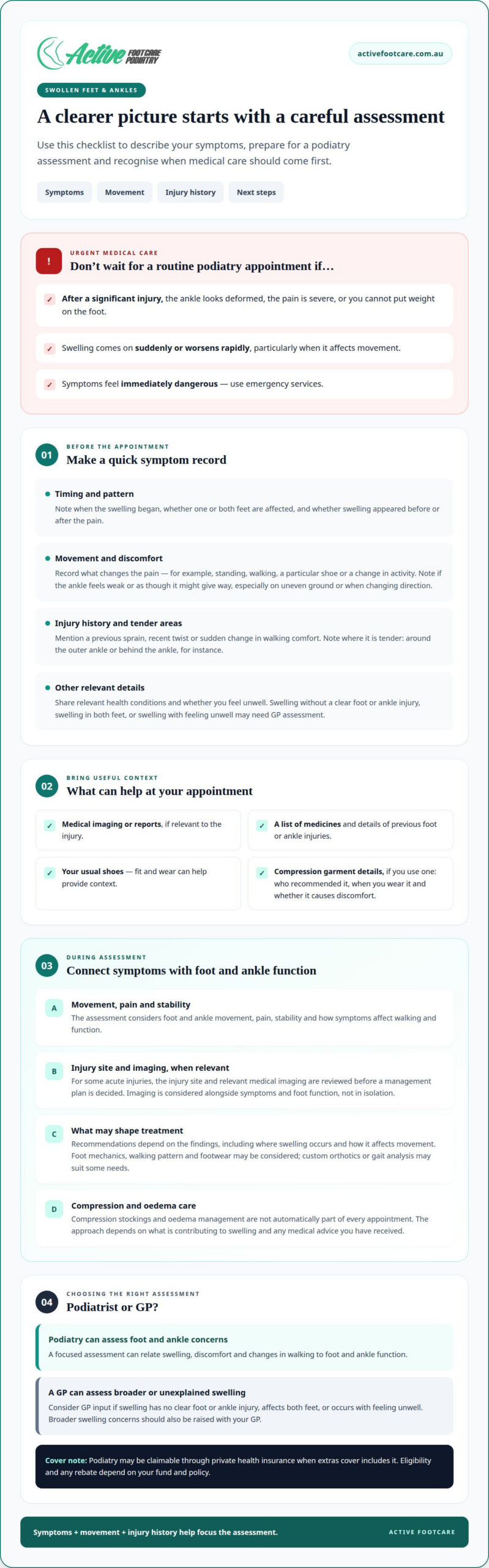
Seek urgent medical care after a significant injury if the ankle looks deformed, pain is severe, or you cannot put weight on the foot. Sudden or rapidly worsening swelling also needs prompt attention, particularly if it affects movement. These signs need timely assessment, not a wait for a routine podiatry appointment. If symptoms feel immediately dangerous, use emergency services.
Common causes and GP assessment
An injury or damaged ankle ligament can contribute to pain, weakness and swelling. A lateral ankle ligament tear is one example; Achilles tendon injuries and fractures near the base of the fifth metatarsal can also affect comfort and walking. If swelling has no clear foot or ankle injury, affects both feet, or occurs with feeling unwell, a GP can assess possible causes beyond local mechanics.
Instability often feels like the ankle might give way, especially when walking on uneven ground or changing direction. Note when it happens, which movements bring it on, and whether swelling appeared before or after the pain. Those details help you describe the problem clearly during an assessment.
Your injury history matters. A previous sprain, recent twist or sudden change in walking comfort can help explain why the ankle feels unreliable. For example, pain after rolling the ankle differs from ongoing weakness without a clear new injury. The location of tenderness matters too: pain around the outer ankle may involve different structures from pain behind the ankle.
Some acute foot and ankle injuries need more than a movement assessment. The injury site and relevant medical imaging can be reviewed before a management plan is decided. A lateral ligament tear, Achilles tendon injury or fracture near the base of the fifth metatarsal may be considered as part of that process. Imaging findings are considered alongside symptoms and foot function, not in isolation.
Before seeking podiatry for swollen feet and ankles in Moorebank, note when the swelling began, whether one or both ankles are affected, and what activities change the pain. Mention any previous injury and whether the ankle feels weak or unstable. This information helps focus the assessment on your symptoms and everyday movement. Podiatry can assess foot and ankle concerns; unexplained or widespread swelling may also need GP input.
Ankle pain and instability can involve ongoing discomfort and weakness, sometimes following an injury or ligament damage. If symptoms are not limited to a single sudden episode, describe the ongoing discomfort and sense of weakness. Explain whether the ankle feels unreliable alongside the pain and how long you have noticed it. A focused account of discomfort, weakness and injury history helps show how the problem affects you.
Clinical podiatry and foot assessments
A clinical assessment connects swelling, discomfort and changes in walking with foot and ankle function. The findings help identify what needs attention and whether another health professional should be involved.
You may be able to claim podiatry through private health insurance if your extras cover includes it. Your fund and policy determine eligibility and any rebate, so check your cover details before booking.
To book near Moorebank, choose an appointment that suits your needs and explain that swelling or ankle symptoms are the reason for attending. Bring relevant medical imaging or reports, a list of medicines, and details of previous foot or ankle injuries. Your usual shoes can also help show how they fit and wear.
At the appointment, describe when the swelling began, whether it affects one or both feet, and what changes your symptoms. Mention any recent injury, change in walking pattern or relevant health condition. These details help the podiatrist focus the assessment on your circumstances.
Recommended treatments for swelling
Treatment recommendations depend on the assessment findings, including where swelling occurs and how it affects movement. A podiatrist may consider foot mechanics, walking pattern and footwear when deciding whether podiatry care could help. For some acute injuries, Dr Abdel Kak reviews the injury site and relevant medical imaging before deciding on a management plan. This connects clinical findings with the injury details.
Ask how each proposed step relates to your symptoms and what changes to monitor during everyday activities. For example, note whether standing, walking or a particular shoe affects discomfort. Clear observations can guide follow-up discussions and show whether the plan needs adjustment. If swelling seems unrelated to foot function, a GP assessment may also be appropriate.
Compression stockings and oedema management
Podiatrists assess foot and ankle concerns, but compression stockings and oedema management are not automatically part of every appointment. The right approach depends on what is contributing to the swelling and any medical advice you have received. Tell the practitioner if you already wear compression garments, who recommended them and whether they cause discomfort.
For an appointment about swelling, bring the garment or its fitting details if you have them. Explain when you wear it and whether swelling changes during the day or after activity. This gives the practitioner useful context for discussing foot comfort and movement. Raise broader swelling concerns with your GP.
This information gives the practitioner context for discussing your concerns alongside the assessment findings. The clinic sees lateral ankle ligament tears, Achilles tendon injuries and fractures near the base of the fifth metatarsal during non-surgical treatment consultations. If one of these terms is relevant to your appointment, describe your symptoms and injury history, and bring any relevant imaging or reports. Ask the practitioner to explain how the assessment relates to your symptoms and what information may be useful at follow-up.
Which podiatrists in or near Moorebank treat swollen feet and ankles?
Look for a podiatrist who assesses foot and ankle symptoms, walking function and injury-related changes. For swelling around Moorebank, explain what has changed and ask how the appointment will assess your specific symptoms.
A useful assessment starts with the pattern. Tell the podiatrist whether swelling affects one foot or both, when it began, and whether it changes after walking or standing. For example, swelling after an ankle twist gives different context from swelling without a clear injury. Include pain, weakness, footwear changes and difficulty with daily activities.
Ask how the practitioner will examine your ankle as well as your foot. A thorough clinical discussion should connect your symptoms with movement, balance, tenderness and walking. If the ankle feels unstable when turning or walking on uneven ground, describe that specific movement. These details keep the consultation focused on your concern, not just visible swelling.
For an acute injury, ask whether the assessment considers the injury site and relevant medical imaging. Ankle ligament damage, Achilles tendon injury and a fracture near the base of the fifth metatarsal involve different structures. Sharing imaging reports and previous treatment details helps the practitioner understand your injury history and discuss a suitable management pathway.
Before booking, explain the main issue plainly, for example, “my ankle swells after walking” or “it feels weak after a sprain”. Ask whether the appointment includes a foot and ankle assessment and whether you should bring reports or imaging. A clear description helps the practice direct your concern to an appropriate appointment.
Prepare a short record to make the visit more focused:
- Note when the swelling began and whether one or both feet are affected.
- Describe any injury, including the movement that caused it.
- List the activities that increase discomfort, such as walking or standing.
- Bring relevant imaging reports, medication details and your usual footwear.
A GP is also relevant when swelling has no clear foot or ankle cause, affects both feet, or occurs alongside broader health changes. A podiatrist focuses on foot and ankle function; a GP can assess concerns beyond that scope. The right starting point depends on whether symptoms centre on a local injury or extend beyond the feet.
If travel is difficult, a podiatrist home visit can bring a foot assessment to you. People using NDIS supports can also consider whether NDIS podiatry services suit their needs and plan. In either case, describe the swelling, mobility challenges and daily tasks affected so the appointment can address practical concerns.
What symptoms of swollen feet or ankles require urgent medical care rather than a podiatrist?
Some swelling needs prompt medical assessment before a routine podiatry appointment. Consider whether symptoms suggest a serious injury, infection or wider health problem, rather than a local foot or ankle concern.
After an injury, seek urgent medical care if the ankle or foot looks misshapen, pain is severe, or you cannot stand or walk on it. A significant injury may involve structures that need timely assessment. Don’t force movement or keep walking to test the joint. Keep the affected foot as comfortable as possible while arranging care.
Rapidly worsening swelling, spreading redness or warmth, and a wound with discharge can also warrant urgent assessment. These changes may need medical attention beyond a podiatry appointment, especially if you feel unwell. An ingrown toenail can cause pain and swelling, with potential infection; increasing redness or discharge around the nail needs prompt attention.
Call for emergency help if swelling occurs with chest pain, difficulty breathing, fainting or sudden confusion. These symptoms are not simply foot mechanics. Prioritise immediate medical assistance rather than travelling to a routine appointment or waiting to see whether the swelling settles.
Use this practical decision guide:
- Urgent medical care: severe injury, visible deformity, inability to bear weight, rapidly worsening symptoms, or feeling seriously unwell.
- Prompt GP assessment: swelling without a clear injury, persistent or recurring swelling, or symptoms affecting both feet.
- Podiatry assessment: local foot or ankle discomfort and movement concerns without urgent warning signs.
These categories help organise your next step, but don’t delay urgent care if symptoms are severe. A GP can assess concerns that extend beyond foot function. A podiatrist can assess local foot and ankle symptoms, including injury-related pain and instability.
Before seeking care, note when the swelling began, whether it is changing, and what symptoms appeared alongside it. For example, record whether a wound, redness, feverishness or difficulty walking has developed. Share this timeline with the clinician, along with relevant injury details and medical imaging reports.
If symptoms worsen while you wait for a planned appointment, reassess the urgency rather than relying on the original booking. A change from mild local swelling to severe pain, visible deformity or feeling acutely unwell calls for a different response. Choose the care pathway that matches your symptoms now.
What treatments can a podiatrist recommend for swollen feet and ankles?
Treatment depends on what the assessment finds, where the swelling occurs, and how it affects walking. A podiatrist first considers whether the concern relates to foot or ankle function, such as pain after an injury, or needs assessment beyond podiatry.
For a local foot or ankle problem, care may focus on comfort, movement and everyday activities. The podiatrist can discuss how walking, standing, footwear or a particular movement affects your symptoms. For example, discomfort in a work shoe may call for different practical advice from swelling that appears after an ankle injury.
Recommendations should be based on the findings, not swelling alone. A movement assessment can help identify whether foot mechanics or an altered walking pattern contributes to the difficulty. If these factors matter, a podiatrist may discuss ways to support foot function and adapt activities while managing the concern.
For an acute injury, the injury site and relevant medical imaging can inform the management plan. A ligament injury, Achilles tendon problem or fracture near the base of the fifth metatarsal may call for a different approach. The plan should reflect the injury and your symptoms, rather than treating every swollen ankle the same way.
Some swelling may not stem from foot mechanics. If it is unexplained, affects both feet or occurs alongside broader health changes, a GP assessment can help address causes outside podiatry. Severe pain, visible deformity or inability to bear weight calls for medical care rather than routine treatment planning.
Ask the podiatrist to explain the purpose of each recommendation and how it relates to your symptoms. Discuss what to observe during daily activities, such as whether walking or standing changes your discomfort. Note any new pain, changes in swelling or difficulty with usual tasks, and share these details at follow-up.
If travel is difficult, a podiatrist home visit may make an assessment easier to access. NDIS podiatry services may also suit people whose foot care needs relate to their NDIS support arrangements. These options address access and support needs; treatment still depends on the assessment.
Anti-fungal Laser Treatment is for fungal nail infections, not general swelling or ankle instability. If nail changes accompany swelling, raise them separately during the appointment so the podiatrist can consider each concern appropriately. Keeping the issues distinct helps avoid assuming one treatment addresses different symptoms.
If swelling or ankle discomfort is affecting your walking, arrange a podiatry assessment to discuss the symptoms and suitable next steps.
Active Foot Care: Podiatrist Home Visit
Active Foot Care’s Podiatrist Home Visit can help if swollen feet or ankle discomfort make travelling to an appointment difficult. A podiatrist can assess your foot concerns at home and consider how symptoms affect walking and daily movement.
During the assessment, share when swelling occurs, which activities are difficult, and whether your gait has changed. Depending on your needs, Diabetes Foot Assessment, Custom Orthotics or Gait Analysis may also be relevant. These options address different foot health and mobility concerns, with recommendations guided by your assessment.
If getting to an appointment is challenging, contact Active Foot Care to discuss a Podiatrist Home Visit.
Take a practical next step towards easier movement
Start by noticing how your symptoms affect the activities you want to keep doing. A short note about changes in walking, balance or comfort can help you explain what matters most during an assessment. You might focus on getting around the home, returning to a regular walk or feeling steadier on your feet.
If you’re considering podiatry for swollen feet and ankles in Moorebank, choose a next step that fits your symptoms and daily routine. Contact Active Foot Care to discuss an assessment and the concerns you’d like addressed.
Contact Active Foot Care to take the next step towards understanding your foot and ankle concerns.
Frequently Asked Questions
Do Moorebank podiatrists assess causes of foot and ankle swelling or only provide foot care?
Podiatrists assess foot and ankle factors that may contribute to swelling and provide foot care. They can consider how symptoms relate to movement, injury history and walking function. For instance, swelling around an ankle after a twist is a local concern to discuss during an assessment. Podiatry is not a general medical diagnosis for every possible cause, so broader health concerns may also need GP assessment.
Which nearby Moorebank podiatry clinics have accessibility, parking, and home-visit options?
Active Foot Care offers in-clinic care and Podiatrist Home Visits, which can suit people who find travelling difficult. A home visit means foot concerns can be assessed at home without travelling to a clinic. For a clinic appointment, consider how you’ll travel and manage access at the destination. Explain any mobility needs when arranging care so the appointment suits your circumstances.