

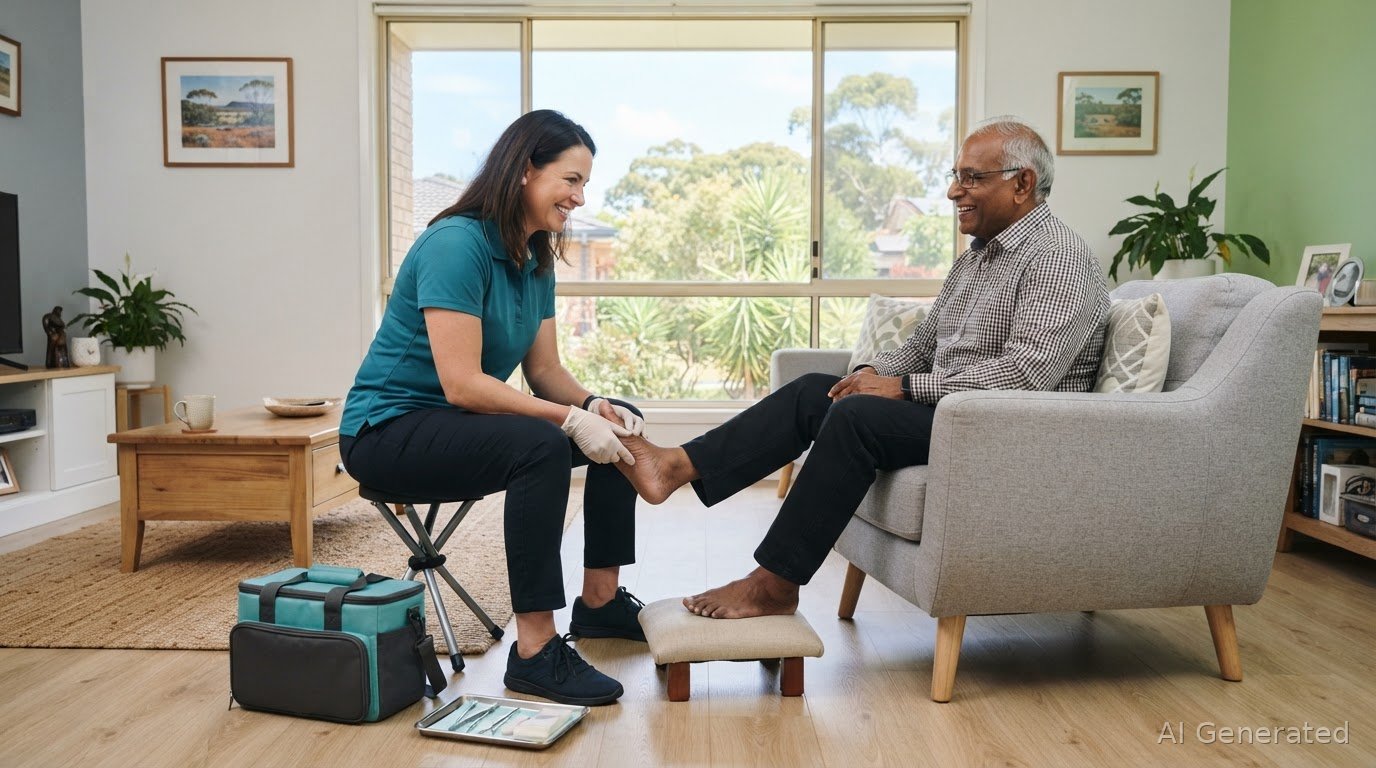
You don’t need to travel to a clinic to arrange foot care at home. If you’re looking for a podiatrist home visit in Liverpool, book a mobile podiatrist who serves your area. Eligible people with a chronic condition may access Medicare-subsidised podiatry through a GP-created Chronic Disease Management Plan, usually for up to five visits a year. NDIS funding and private payment are other options, depending on your circumstances.
It’s understandable to want clear answers before arranging a visit, especially when you’re weighing up the service, the cost and how to pay. This guide explains what home-visit podiatry can involve, the provider options available in Liverpool, and how NDIS, Medicare and private payments work. You’ll also learn what can affect fees and what information to have ready when arranging care, so you can choose a suitable next step with greater confidence.
Key Takeaways
- Home visits can bring podiatry care to you in Liverpool, with the appointment shaped around your foot-care needs.
- NDIS funding and aged care arrangements may affect how home-visit costs are covered; understand the funding pathway before booking.
- Medicare support may be available for eligible people with a chronic condition through a GP-created Chronic Disease Management Plan.
- Private payment is another option, and the service required can influence the overall cost.
- Prepare a brief summary of your mobility, foot-care concerns and payment arrangements to make your appointment enquiry more straightforward.
Do podiatrists do home visits in Liverpool?
Yes, mobile podiatrists can visit people at home in Liverpool, NSW. Choose a practitioner who provides home appointments and serves your address.
Mobile home visits across Liverpool
A home visit brings podiatry care to you, so you don’t need to travel to a clinic. When comparing mobile options, check that the practitioner serves your Liverpool suburb and ask what the appointment can address. Describe whether you need help with a foot concern, ongoing care or mobility-related difficulties. This helps identify the right appointment type.
Which podiatrists offer home visits in Liverpool, NSW? Look for mobile practitioners who explicitly provide home appointments in Liverpool and cover your address. Service descriptions can vary, so check whether home visits are offered before booking.
NDIS-registered mobile care
NDIS participants can choose mobile podiatry that provides home visits and suits their funding arrangements. Before booking, identify how your plan is managed and whether the practitioner’s registration status fits that arrangement. Travel must be agreed before booking under the applicable funding rules. Discussing the appointment purpose and travel arrangements clearly can help avoid misunderstandings.
For NDIS-funded care, explain the foot-related support you need and why a home appointment suits you. Keep your plan details and relevant funding information accessible during the enquiry. If language support would help, ask about an interpreter through TIS National, which is available free for NDIS appointments.
Preparing for a home visit
What should you prepare for a podiatrist home visit? Note your main concern, when it began and how it affects walking or daily activities. Set aside relevant health or medication details, the footwear you regularly wear and information about existing supports. Clear a comfortable space where you can sit while the practitioner examines your feet.
If you have a specific concern, such as a sore area or difficulty putting on shoes, mention it when arranging the appointment. Keep useful records close by, and have your funding details ready if the visit is NDIS-funded. These steps help keep the conversation focused on your needs.
Check qualifications by asking for the practitioner’s full name and professional registration details, then verify them through the relevant Australian registration register. Also clarify whether they are registered for NDIS-funded services if that matters to your funding arrangement.
When should foot problems be seen urgently rather than waiting for a home visit? Seek urgent medical attention for a serious wound, significant bleeding or symptoms that worsen rapidly. Don’t wait for a routine appointment if you feel acutely unwell or the problem needs immediate attention.
According to the Australian Bureau of Statistics, “Personal (b)” is $694 weekly. According to the Australian Bureau of Statistics, Liverpool had 233,446 residents in the 2021 Census.
Do NDIS home visit fees differ from in-clinic appointments?
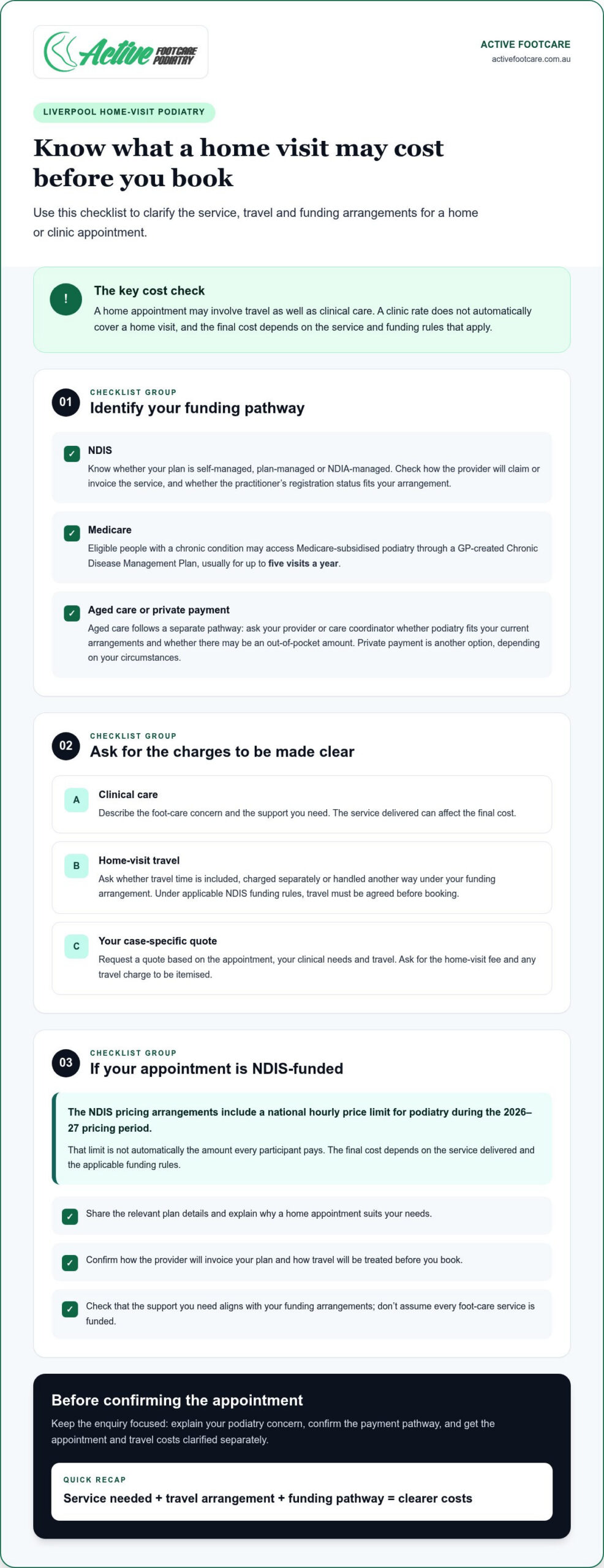
Costs can differ because a home appointment may involve travel as well as clinical care. For NDIS-funded podiatry in Liverpool, understand what the appointment covers, how travel is charged and which funding arrangement applies before booking.
The NDIS pricing arrangements include a national hourly price limit for podiatry during the 2026-27 pricing period. That limit is not automatically the amount every participant pays. The final cost depends on the service delivered and the applicable funding rules. A clinic appointment and a home visit may therefore have different costs, particularly when travel is involved.
Travel must be agreed before booking under the applicable funding rules. Ask for appointment and travel costs to be explained separately, so you understand what each charge covers. For example, clarify whether travel time is included, charged separately or handled another way under your plan. Don’t assume the clinic rate covers a home visit.
Your NDIS funding arrangement also matters. Before confirming an appointment, identify whether your plan is self-managed, plan-managed or NDIA-managed, then establish how the provider will claim or invoice the service. Share the relevant plan details and describe the podiatry support you need. This helps align the appointment with your funding arrangements without assuming every foot-care service is funded.
Aged care funding follows a separate pathway from the NDIS. If you receive aged care support, discuss the podiatry appointment with your aged care provider or care coordinator. Ask whether the service can be included in your current care arrangements, how travel is treated and whether you will have an out-of-pocket amount. The funding source and agreed services determine the process.
Use these steps to clarify costs before choosing a home or clinic appointment:
- Describe the podiatry concern and the care you need.
- Ask for the home-visit fee and any travel charge to be itemised.
- Confirm how the provider will invoice your NDIS plan or aged care arrangement.
- Request a case-specific quote, based on the appointment, clinical needs and travel.
For example, someone comparing a Liverpool clinic appointment with a home visit should weigh travel arrangements alongside the clinical service. An NDIS participant in Sydney has the same practical need to clarify plan management and travel before booking, though the provider’s location and journey will differ. Clear cost details make it easier to compare options and understand what your funding is expected to cover.
Podiatry services and provider options
A home appointment lets a podiatrist assess your feet in your usual surroundings. Care can focus on a specific concern, such as diabetes-related foot care, walking comfort or footwear support.
Podiatry services during home visits
What services can a podiatrist provide during a home visit? An appointment can include a foot assessment and discussion of concerns such as discomfort, skin changes or difficulty walking. A Diabetes Foot Assessment focuses on foot health for someone managing diabetes, while gait analysis examines how a person walks.
Custom orthotics are another podiatry service to discuss if foot mechanics or support are concerns. A home visit can help the practitioner understand how you move around your home, including any difficulty with stairs or getting up from a chair. Describe your main concern when arranging care so the appointment can be directed towards it.
Liverpool service area
For mobile podiatry in Liverpool, first match your home address with the practitioner’s travel area. Liverpool includes different suburbs and residential settings, so provide your suburb and any access details when enquiring. For example, mention whether the appointment is at a house, unit or residential care setting.
Travel arrangements can affect how a mobile appointment is organised. If you live near Liverpool but outside the suburb, give the exact address rather than relying on a broad location description. This helps establish whether a home appointment can be arranged for your area and whether travel needs discussion.
Choosing a provider
Liverpool residents can choose a mobile practitioner, a clinic-based podiatrist offering home appointments, or care arranged through an NDIS or aged care pathway. The right option depends on the appointment setting you need and the type of foot-care support involved. For example, someone who finds travel difficult may prefer care at home.
Start by identifying the service you need, such as a foot assessment, gait analysis or diabetes-related care. Then consider whether home care or a clinic visit better suits your mobility and appointment needs. An Australian podiatrist’s professional registration is also relevant when selecting care; use the practitioner’s full name to check registration through the appropriate register.
For a practical enquiry, write down your main concern, your Liverpool suburb and your preferred appointment setting. Include relevant details about walking or access around your home. These points help clarify the type of podiatry appointment to arrange and distinguish a home visit from a clinic consultation.
Appointment enquiries
A clear enquiry helps match your foot-care concern with the right appointment. Before contacting a service, note your Liverpool suburb, preferred appointment setting and the main reason you need podiatry care. For example, describe whether you’re seeking help with an ingrown toenail, ongoing discomfort or difficulty walking. These details provide a useful starting point for arranging an appointment.
Include practical information that could affect the visit. Explain whether you live in a house, unit or residential care setting, and mention access instructions such as an intercom or difficult parking. If you use a mobility aid, describe how you move around your home. A concise description helps organise the visit around your circumstances.
Prepare a short summary of your foot concern before making contact:
- State which foot is affected and describe the main issue.
- Explain when you first noticed it and whether it has changed.
- List relevant health conditions, medication or previous podiatry care.
- Describe any walking difficulty or support you use at home.
- Note whether you’ll use private payment, Medicare or NDIS funding.
For example, someone reporting a painful ingrown toenail can explain where it is, how long it has bothered them and whether walking feels difficult. A person seeking a general assessment can outline their mobility concerns instead. These examples help explain the purpose of the appointment without trying to diagnose the problem yourself.
Payment details also belong in the enquiry. If you plan to use NDIS funding, have your plan-management information ready and explain which funding arrangement applies. For Medicare, mention that you have a GP-created Chronic Disease Management Plan. If paying privately, ask for a quote that identifies the appointment type and relevant charges. The fee depends on the case and is provided after a quote request; cost factors include the clinical service, appointment setting and travel.
Before finalising an appointment, keep a written record of the agreed date, address, payment pathway and any instructions. Note the practitioner’s name and the service being arranged. If someone else helps manage your care, share these details with them so they can support access to the home and have relevant information available.
A focused enquiry can be brief. For instance: “I’m in Liverpool and need a home appointment for ongoing foot discomfort. I use a mobility aid and plan to pay privately.” That summary gives the service practical details while leaving room to discuss your clinical needs and appointment arrangements.
Medicare and private payment
Medicare support may reduce the cost of podiatry for some people with chronic conditions. In Australia, eligible people may access subsidised podiatry through a GP-created Chronic Disease Management Plan, usually for up to five visits per year. A home appointment still needs to fit the person’s eligibility and plan arrangements.
Start by discussing your foot-care needs with your GP. The GP must create the plan, and eligibility applies to people with a chronic condition. Ask which podiatry care the plan covers and how to use it for a home appointment. For example, someone needing recurring foot care can discuss how that need relates to their condition and plan.
Medicare support and the full appointment fee are not necessarily the same amount. The gap depends on the fee charged and the applicable Medicare benefit. Before booking, ask for the appointment fee, Medicare benefit and any out-of-pocket amount to be explained separately. Keep the plan and payment details together so you understand what the appointment will cost.
Private payment is an option for people paying directly rather than using Medicare or NDIS funding. The price depends on the case and is provided after a quote request; cost factors include the clinical service, appointment setting and travel. A general nail and skin care appointment may differ from a biomechanical assessment, which examines movement and foot mechanics. State the service you need when requesting a quote.
For a private appointment, clarify the payment process and what the fee covers before confirming. If you’re seeking care for a painful toenail, describe the concern and ask for a quote for that appointment type. If movement or walking is the main issue, explain that instead. This gives the provider a clearer basis for outlining the relevant service and charges.
Keep these details together before arranging payment:
- Your GP-created Chronic Disease Management Plan, if relevant.
- The appointment type and reason for seeking podiatry care.
- The quoted fee and any Medicare benefit or out-of-pocket amount.
- The agreed payment method and any home-visit travel charge.
For example, a person with a chronic condition can first discuss eligibility and a plan with their GP, then ask how the appointment fee and Medicare benefit apply. Someone paying privately can request a quote based on their foot-care concern and home-visit requirements. These steps help distinguish a Medicare-subsidised appointment from privately paid care.
For home-based foot care, explore podiatry home-visit care and consider which payment pathway suits your circumstances.
Active Foot Care: Podiatrist Home Visit
Active Foot Care provides podiatry home visits for people who need foot care without travelling to a clinic. A home appointment is a practical option if mobility, transport or your health needs make clinic attendance difficult. The podiatrist can assess your concerns and discuss care suited to your individual needs.
For diabetes-related foot concerns, a Diabetes Foot Assessment can guide your foot-care needs. If walking mechanics or foot support are concerns, Gait Analysis and Custom Orthotics are options to discuss. These services take different approaches, from assessing how you move to providing individually tailored support.
Contact Active Foot Care to arrange a podiatrist home visit in Liverpool and discuss the podiatry care that may suit your needs.
Take the next step towards easier movement
Think about what you’d most like to manage more comfortably at home, whether that’s standing, walking or keeping up with daily routines. A podiatrist home visit in Liverpool brings care to the setting where those challenges arise, giving you the opportunity to discuss practical goals with a podiatrist.
Before getting in touch, consider what has changed in your foot comfort or mobility and what you hope to address. A short note can help you explain your priorities clearly, especially if someone supports you with day-to-day care or appointment arrangements. You can then discuss a suitable way to begin.
Active Foot Care can help you take that step with podiatry care focused on your needs. Contact Active Foot Care to enquire about arranging care, and move forward with a clearer plan for looking after your feet.
Frequently Asked Questions
How do I find a mobile podiatrist in Liverpool?
Look for a registered podiatrist who provides home appointments in Liverpool, then match their services to your concern. For example, ask whether they can assess diabetes-related foot health, walking mechanics or a painful skin or nail problem. Check the practitioner’s registration using their full name. If you’re using funding, establish whether the provider and appointment suit your payment arrangement before booking.
How do I book an appointment?
Contact Active Footcare and describe your concern, suburb and preference for a home appointment. Active Footcare provides home visits, so your enquiry can explain what support you’re seeking and any access considerations. For instance, mention a unit intercom or mobility aid. If you’re using NDIS funding, have your plan-management details ready. Ask for the appointment arrangements and payment process to be outlined.
How quickly do providers respond to enquiries in Liverpool?
Response times vary between services, so include clear contact details and a concise description of your request. In the last 180 days, 38% of 16 mobile podiatry requests across Australia received no response. To make follow-up easier, say whether your enquiry concerns a new foot problem or ongoing care, and note your preferred contact method. If symptoms are urgent, seek appropriate medical attention rather than waiting for a routine reply.
What suburbs around Liverpool do mobile podiatrists service?
Mobile podiatry coverage includes Liverpool, Bankstown, Moorebank, Sydney and Campbelltown. Coverage depends on the service area and travel arrangements, so give your exact suburb and appointment address when enquiring. If you live near Liverpool but outside those locations, include your suburb rather than assuming it falls within a provider’s travel area. This helps clarify whether a home appointment can be arranged for your address.
How much does a podiatrist home visit cost in Liverpool?
The fee depends on the clinical service, appointment setting and travel, and is provided after a quote request. Describe whether you need routine foot care, a diabetes foot assessment or an evaluation of walking mechanics. Ask for the appointment charge and any travel component to be explained clearly. If using funding, also ask how the relevant plan or payment arrangement applies to the proposed visit.
Does Medicare cover home-visit podiatry in Australia?
Eligible people with a chronic condition may receive Medicare-subsidised podiatry through a GP-created Chronic Disease Management Plan, usually for up to five visits per year. Discuss your condition and plan eligibility with your GP, then ask how the benefit applies to the home appointment. Medicare support does not automatically mean the full fee is covered, so clarify any out-of-pocket amount before arranging care.
Can NDIS or aged-care funding pay for a home podiatry visit?
NDIS funding may cover podiatry when the support aligns with the participant’s plan and funding arrangements. Active Footcare provides NDIS podiatry for self-managed or plan-managed participants. Travel must be agreed before booking under the applicable funding rules. For aged-care support, discuss podiatry and any home-visit travel with your care coordinator, who can explain how the service fits your current care arrangements.
How do I book a mobile podiatrist in Liverpool, and what details are needed?
Send an enquiry with your name, Liverpool suburb, preferred appointment setting and a brief description of the foot-care concern. Include relevant mobility or home-access details, such as stairs or an intercom. If you’re arranging care for someone else, explain your role and provide their consent for the appointment discussion. Add NDIS plan-management details or Medicare plan information if relevant, so the service can discuss the appropriate payment pathway.