

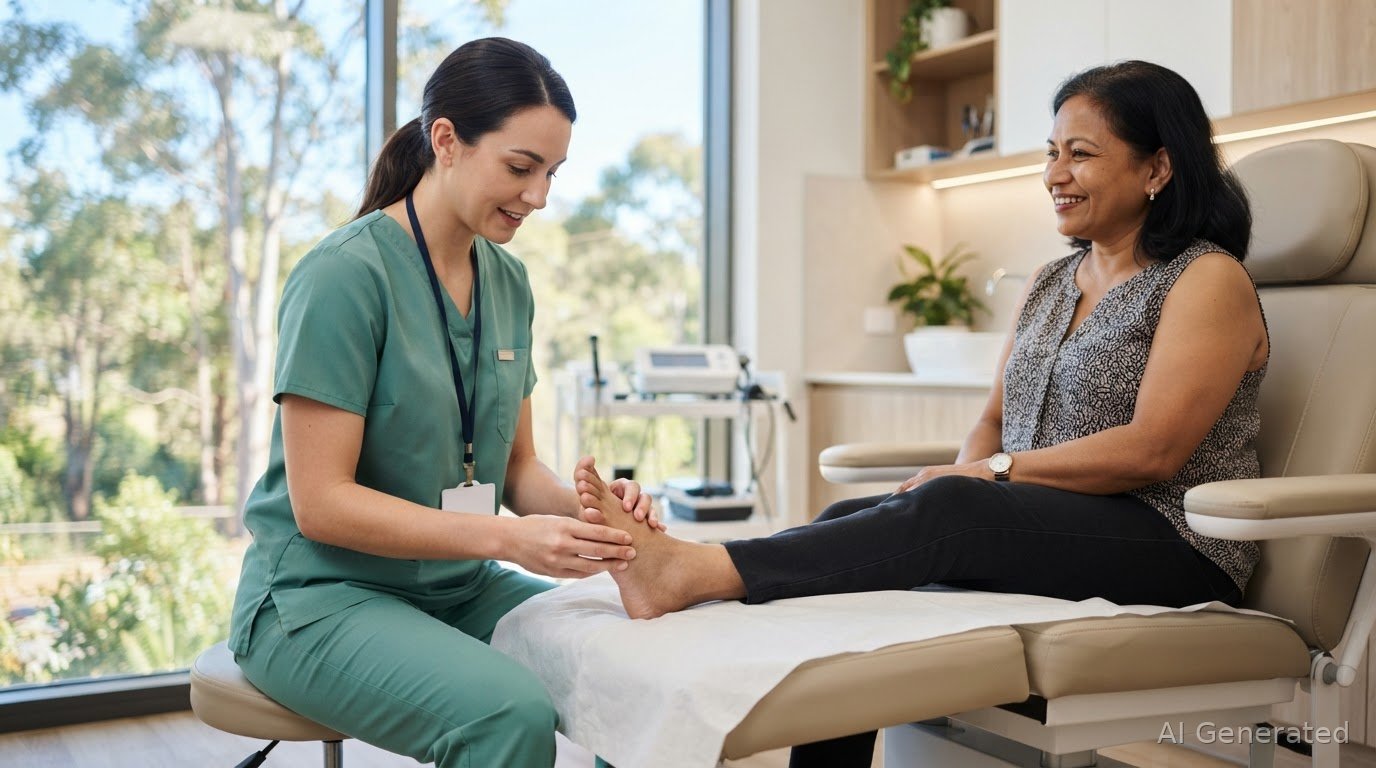
A painful bunion can affect more than your choice of shoes. A podiatrist for painful bunions in Campbelltown can assess your big toe joint, foot structure and movement through a physical examination and medical history. X-rays may also be considered to assess the bunion’s structure and severity. These findings help shape care around your symptoms and everyday activities.
If walking, exercising or finding comfortable footwear has become difficult, it’s understandable to want practical answers. A bunion involves the big toe angling towards the other toes. Pressure around the joint can make everyday movement painful.
Read on to learn what a podiatrist may assess, which factors can contribute to bunions and how treatment and rehabilitation can be tailored to your needs. We’ll also explain how padding, orthotics and exercises may form part of a care plan, and how Active Foot Care’s podiatry services can support your next steps near Campbelltown.
Key Takeaways
- Notice how bunion discomfort affects walking, exercise and footwear, and share these changes during your assessment.
- A podiatrist can consider your medical history, examine your foot and assess how your lower limb moves to guide care.
- Padding, cushioning and orthotics may help manage pressure, while the right approach depends on your foot mechanics and symptoms.
- Rehabilitation may include stretching and strengthening exercises to support toe-joint flexibility and stability.
- Explore whether a podiatrist home visit, gait analysis or custom orthotics could suit your needs near Campbelltown.
Foot and lower-limb assessment and diagnosis
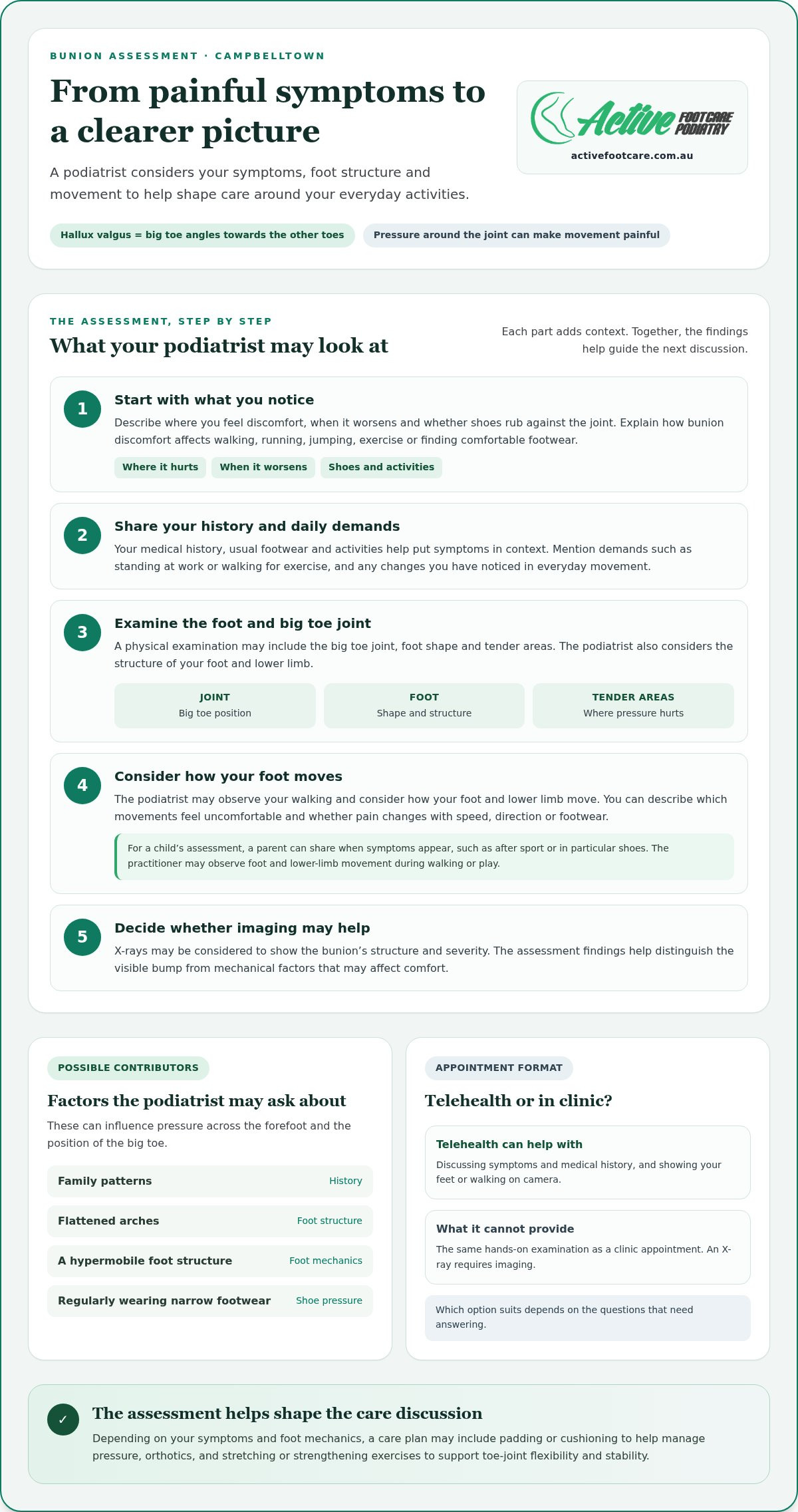
A bunion assessment starts with your symptoms and how they affect everyday movement. Bunions, medically known as hallux valgus, involve the big toe angling towards the other toes. Pressure around the misaligned joint can make walking, running, jumping and other movements painful. A podiatrist will ask where you feel discomfort, when it worsens and whether shoes rub against the joint.
What a bunion assessment involves
Your appointment may include a review of your medical history and a physical examination of your feet and lower limbs. The podiatrist examines the big toe joint, foot shape and tender areas, then considers how your foot moves. X-rays may help show the bunion’s structure and severity. Together, these steps help distinguish the visible bump from the mechanical factors affecting your comfort.
The assessment also considers possible contributors, including family patterns, flattened arches, a hypermobile foot structure and regularly wearing narrow footwear. These factors can influence pressure across the forefoot and the position of the big toe. The podiatrist may ask about your usual shoes and activities, such as standing at work or walking for exercise, to understand how symptoms relate to your daily demands.
Telehealth or an in-clinic appointment
Telehealth can help you describe symptoms, discuss your medical history and show your feet or walking on camera. It cannot provide the same hands-on examination as a clinic appointment, and an X-ray requires imaging. Most major Australian private health funds have included podiatry as eligible for telehealth rebates since June 2020. Whether a remote or in-person assessment suits depends on the questions that need answering.
Children’s feet and walking assessments
For a child, the podiatrist can ask about foot discomfort, activity, footwear and changes noticed during walking or play. A walking assessment lets the practitioner observe how the child’s feet and lower limbs move, including the position of the big toe during each step. A parent can describe when symptoms appear, such as after sport or in particular shoes. These details help focus the examination.
A walking assessment can also clarify how a bunion affects movement beyond the toe joint. The podiatrist may observe the child or adult walking, compare foot positions and ask which movements feel uncomfortable. If pain changes with speed, direction or footwear, those examples provide useful context. The findings guide the next discussion, including whether further examination or imaging would help explain the joint’s structure.
Podiatry services near Campbelltown
Medicare, private health insurance and care plans have different eligibility rules. The relevant pathway, policy or plan determines whether podiatry is funded. Appointment timing depends on clinic availability and the type of assessment or support needed.
In Campbelltown, a useful first step is matching the service to your concern. Bunion pain, a need for orthotics and difficulty attending a clinic each call for different practical arrangements.
Finding a bunion podiatrist
A podiatrist who assesses foot mechanics and painful joints can help investigate bunion symptoms. When choosing a Campbelltown service, consider whether the appointment can address your concern, such as footwear pressure, discomfort when walking or support needs. Ask what the assessment involves and whether follow-up can address your goals. A clear explanation of the next steps helps you understand how the findings guide care.
Appointment availability
There is no standard wait time for a Campbelltown podiatry appointment. Timing varies with clinic scheduling, appointment type and whether you need an in-clinic assessment or a home visit. When arranging an appointment, explain that your bunion is painful and describe how it affects walking or footwear. This helps the clinic understand the reason for your visit and arrange an appropriate appointment.
Local podiatry can address more than the bunion itself. A practitioner can consider how your foot moves, whether footwear pressure aggravates the area and whether orthotics may suit your needs. If attending a clinic is difficult, a podiatrist home visit is another option. The setting affects how the appointment is arranged, while your symptoms and mobility needs shape its focus.
For people using NDIS supports, podiatry can relate foot care to practical goals, such as moving around the home or taking part in daily activities. The relevant plan and funding arrangements determine whether a particular appointment fits. Before booking, identify the functional concern you want addressed, such as discomfort during transfers or difficulty walking outdoors. This gives the podiatrist useful context for discussing assessment and support.
Coverage questions require a similar distinction. Medicare eligibility, a private health policy and an NDIS plan are separate pathways, each with its own criteria. A referral or care plan does not establish what a private policy covers or whether a particular service fits an NDIS plan. Keep relevant documentation handy and describe the proposed appointment clearly when discussing coverage with the responsible scheme or insurer.
For a Campbelltown appointment, note when pain occurs, what footwear you wear and which activities are affected. Include whether you need orthotics, NDIS-related support or an appointment at home. These details help clarify the service format and practical questions to address before your visit.
Treatment plans and rehabilitation exercises
A bunion care plan can combine pressure relief with exercises that support toe-joint movement. The podiatrist considers what aggravates your symptoms, such as tight footwear, walking or exercise, then chooses strategies suited to those demands. Padding or cushioning may reduce contact over the prominent joint. Ice therapy may also be used to manage discomfort. These measures address symptoms, while rehabilitation focuses on movement and function.
Relieving pressure and discomfort
Orthotics may help address biomechanical factors that contribute to bunion symptoms. A podiatrist considers how your foot moves and where pressure builds before discussing suitable support. Dry needling may help ease muscle tension and discomfort around the bunion. It is one possible part of care, not a substitute for understanding what triggers your pain. For example, discomfort after long walks may call for a different plan from pain caused mainly by shoe pressure.
Exercises for flexibility and stability
Rehabilitation exercises can target flexibility and control around the big toe. Stretching may improve joint flexibility, reduce tension and help prevent bunion progression. Strengthening exercises may improve stability around the big toe joint, reduce pain and help limit progression. Exercises should suit your movement needs, such as walking comfortably or returning to regular activity. Your plan can focus on controlled movement rather than pushing into discomfort.
- Stretching: work on toe-joint flexibility and tension.
- Strengthening: build stability around the big toe joint.
- Pressure management: consider padding, cushioning or orthotic support.
Use the plan as a practical routine, not a one-off response. Note which movements feel restricted and whether walking becomes easier as you practise. These observations can guide adjustments to exercise selection and support. Focus on how the joint and foot function during your usual activities, not just on the bunion’s appearance.
Other foot pain and ingrown toenails
Foot pain can have different causes, so treatment depends on the affected area and the activity that triggers symptoms. A painful ingrown toenail, for example, needs an assessment of the nail and surrounding toe, rather than bunion exercises. If surgery is being considered for an ingrown toenail, discuss the reason, intended approach and recovery needs with the treating clinician. That decision is separate from bunion rehabilitation and should reflect the toe’s presentation.
For bunion discomfort, combine symptom management with exercises selected for your joint and movement goals. Padding, orthotics, stretching and strengthening each address different aspects of the problem, so the plan should explain the role of each step.
Bunion care
Which Campbelltown podiatrists have good reviews for bunion care? Look for reviews describing bunion assessment, clear explanations and practical follow-up, rather than relying on a rating alone. Specific comments about walking comfort, footwear advice or orthotic support offer more useful context than general praise.
A bunion, or hallux valgus, is a change in the big toe joint that angles the toe towards its neighbours. The prominence can widen the foot and make comfortable shoes harder to find. Care focuses on symptoms and function, not simply the joint’s appearance. Note which shoes rub, which activities hurt and whether discomfort limits walking.
Non-surgical care can address pressure and foot mechanics. Padding or cushioning can reduce rubbing over the joint, while orthotics can help address biomechanical factors contributing to symptoms. A podiatrist can consider how your foot moves and which activities matter to you before discussing a suitable approach. For example, someone troubled by shoe pressure needs different practical advice from someone whose pain limits longer walks.
When should bunions be referred to a GP or foot and ankle surgeon? A GP is appropriate when symptoms are worsening, the problem affects general health or another medical concern needs assessment. A foot and ankle surgeon can discuss surgical options when persistent pain and functional limitations remain significant despite non-surgical care.
A visible bunion does not automatically mean surgery is needed. A referral discussion should focus on pain, daily function, joint structure and the care already tried. Bring details about walking limits, footwear problems and previous supports, such as padding or orthotics. These examples help explain how the bunion affects daily life and what you hope treatment will change.
What are the risks and recovery time for bunion surgery in Australia? Risks can include infection, wound-healing problems, stiffness, ongoing pain or changes in toe position. Recovery time depends on the procedure, bone healing, wound care and the demands of everyday activities. The treating surgeon explains the expected recovery plan for the operation.
Before discussing surgery, clarify what the procedure aims to address and what recovery involves. Ask how the plan accounts for work, walking and the footwear needed during recovery. The surgeon can explain potential complications, aftercare and activity restrictions for the proposed operation. These details help you weigh surgery against continued conservative care.
For people who have difficulty attending appointments, a podiatrist home visit provides an assessment in the home setting. NDIS podiatry services can also relate foot care to mobility and daily activities. These options address access and support needs, but do not replace a surgical consultation when an operation is being considered.
Keep a short record of symptoms, shoes that cause rubbing and activities that increase discomfort. Sharing these examples makes a bunion-care discussion more specific, whether it centres on pressure relief, orthotics or a referral for surgical advice.
Which podiatrists in Campbelltown treat painful bunions?
A podiatrist for painful bunions in Campbelltown assesses foot function and bunion-related symptoms. The care discussion can cover how the joint affects walking, footwear and daily activities, then consider suitable ways to manage pressure. Choose an appointment that addresses your concern directly, whether pain appears during exercise, at work or in particular shoes.
A useful consultation connects your symptoms with a practical care plan. If a shoe rubs the bunion, for example, the discussion may focus on pressure and cushioning. If pain interferes with walking, the practitioner can consider foot mechanics and movement. This makes the appointment specific to your experience, rather than treating the visible bump as the only concern.
Ask how the assessment findings inform each suggested step. A clear explanation should link the issue, such as pressure around the big toe joint, with the proposed response, such as padding or orthotic support. You should also understand what the plan aims to help with, whether that is wearing everyday shoes more comfortably or managing discomfort on walks.
Care may involve more than one approach. A podiatrist can consider how padding, cushioning, exercises or orthotics relate to your symptoms and foot mechanics. Someone who finds walking painful may need a different focus from someone mainly troubled by shoe contact. The key is understanding how each option fits your goals and the assessment findings.
Bring useful examples to your appointment. Note which activities bring on pain, which shoes cause rubbing and what changes you have already tried. If you use orthotics, bring them so the practitioner can consider how they fit your footwear and routine. These details make the conversation more specific and help identify what needs attention first.
For a child, describe how discomfort affects play, sport or walking to school. For an adult with mobility needs, explain how the bunion affects daily tasks, such as moving around the home. These examples help the podiatrist relate foot care to real activities, rather than discussing symptoms in isolation.
Some people need care in a different setting. A home visit can help when getting to an appointment is difficult, while NDIS podiatry services may support foot-care needs connected with mobility and daily activities. Explain the practical barrier or goal so the appointment can focus on the appropriate care pathway.
Expect the discussion to distinguish symptom management from surgical assessment. A podiatrist can explain conservative care options and when ongoing pain or functional limitations may warrant referral for surgical advice. The aim is to understand the next steps, how they relate to your symptoms and what information will help you make an informed decision.
Choose a Campbelltown podiatrist who can relate your bunion symptoms to walking, footwear and daily activities, then explain how options such as padding, cushioning, exercises or orthotics may suit your needs.
Active Foot Care: Podiatrist Home Visit
Active Foot Care offers Podiatrist Home Visits for people who find travelling to an appointment difficult. A podiatrist can assess foot concerns at home and discuss practical next steps for managing bunion discomfort. This can help when walking or leaving home is challenging.
Depending on your needs, care may also include Gait Analysis to assess movement or Custom Orthotics for tailored support. Active Foot Care also provides Diabetes Foot Assessments for people who need this specific foot-care service. These services address different concerns, so the discussion can focus on what matters to your mobility and daily activities.
If painful bunions are affecting your routine, contact Active Foot Care to discuss a podiatry home visit.
Take your next step towards comfortable movement
Choosing a podiatrist for painful bunions in Campbelltown is an opportunity to focus care on what you want to do more comfortably. Before your appointment, think about one activity you’d like to make easier, such as walking to the shops, exercising or wearing work shoes. This gives the discussion a practical starting point.
You could also note what you want clarified, whether that’s understanding your options, discussing a care plan or knowing when another opinion may help. Clear priorities make it easier to take part in decisions about your foot care and understand the steps ahead.
Active Foot Care can help you discuss the podiatry support that fits your needs. Contact Active Foot Care to take the next step. With a clear goal and the right guidance, you can move forward with greater confidence.
Frequently Asked Questions
What are some common reasons people see a podiatrist in Campbelltown?
People commonly seek podiatry help for bunion discomfort, heel pain, ingrown toenails, flat feet and diabetes-related foot-care needs. Others want to understand how their feet move during walking or running. Recurring heel pain after exercise or a toenail that catches in footwear, for example, can make everyday activities uncomfortable. Describe when the problem occurs and what it stops you doing, so the assessment can focus on your concern.
What conditions do you treat in Campbelltown?
Active Foot Care provides podiatry for concerns including heel pain, ingrown toenails, flat feet and fungal nail infections, as well as bunion-related symptoms. The team also assesses foot-care needs connected with diabetes or NDIS support. The appropriate service depends on the concern: fungal nail infection, for instance, is treated differently from discomfort caused by foot mechanics. Explain your symptoms and daily needs when arranging care in Campbelltown.
What bunion treatments do Campbelltown podiatrists offer?
Bunion care may include padding or cushioning, orthotics, ice therapy and exercises, with the approach shaped by your symptoms and foot function. A podiatrist may also discuss dry needling for muscle tension around the joint. These options aim to manage discomfort and support movement, but not every option suits everyone. Ask how each suggested treatment relates to a specific problem, such as rubbing inside a work shoe or pain during a walk.
What should I expect at a podiatry assessment for bunions?
Expect to discuss your symptoms, medical history and how the toe affects daily activities. The podiatrist may examine your foot and observe how you move. X-rays may help assess joint structure and bunion severity. Before your appointment, note which shoes or activities trigger pain and bring any orthotics you use. Explain, for example, whether discomfort starts during a walk or after wearing particular shoes.
What non-surgical treatments can relieve bunion pain?
Non-surgical options include reducing pressure with padding or cushioning, using orthotics where appropriate and applying ice therapy for discomfort. A care plan may also include stretches for flexibility and strengthening exercises for joint stability. Choose footwear that does not press directly on the sore area, and notice which changes make walking more comfortable. Share your observations with your podiatrist to help guide the next steps in your care.