

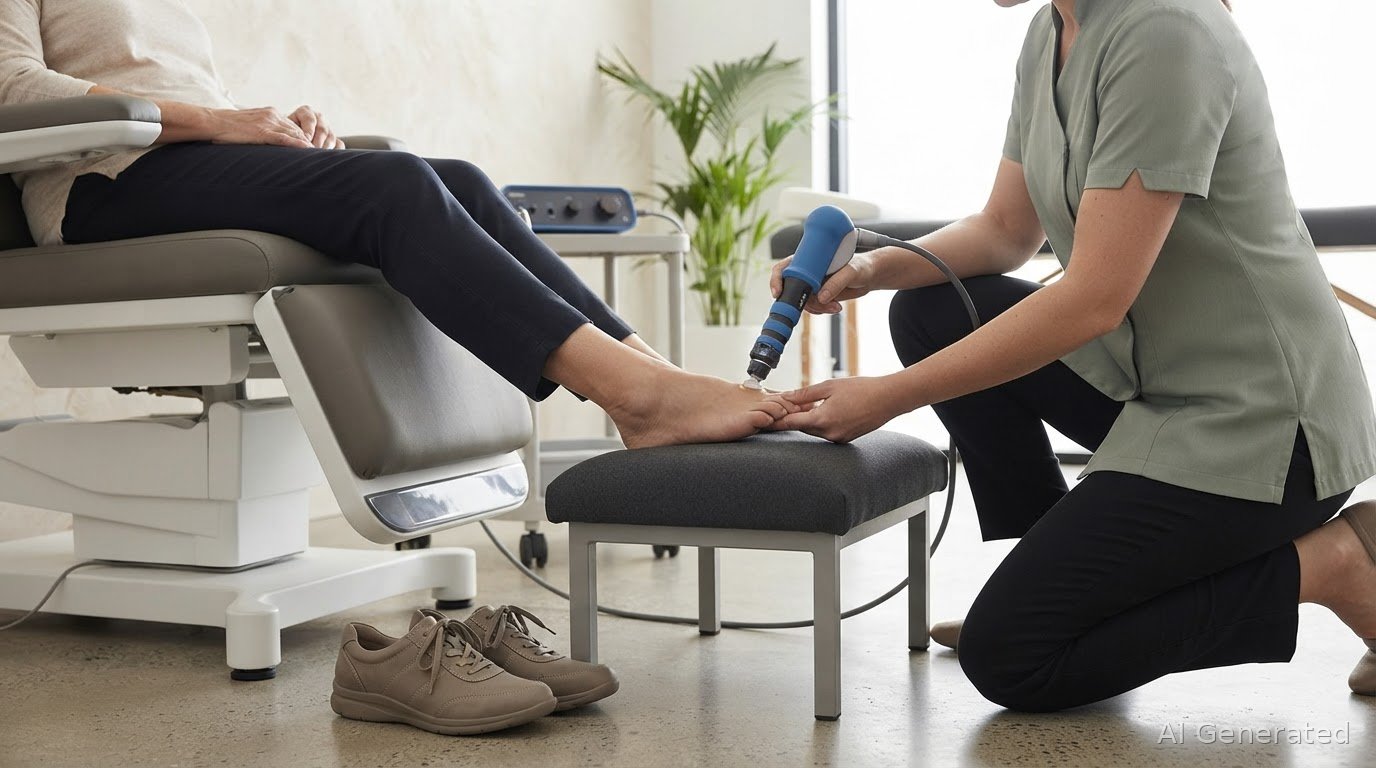
A heel spur doesn’t always explain heel pain. Many patients improve significantly within 6-12 weeks of conservative treatment, although the time depends on what’s causing the pain and how the foot responds to care. If you’re looking for a podiatrist for heel spurs near me in Sydney, it helps to know that treatment usually focuses on easing symptoms and reducing strain, rather than removing the spur.
Heel pain can be frustrating, especially when it hurts during your first steps in the morning or on a walk. If you’re searching for a podiatrist for heel spurs near me in Sydney, you may also want to know what’s causing the pain and whether your footwear or the way your feet move is contributing.
This guide covers common causes of heel pain, signs that may point to plantar fasciitis, and how footwear and foot mechanics can shape a care plan. You’ll also learn what can affect recovery and how a podiatrist can assess your symptoms and discuss next steps.
Key Takeaways
- Conservative care often brings significant improvement within 6-12 weeks, but treatment time depends on the cause of pain and how your foot responds.
- A heel spur can appear alongside plantar fasciitis without being the main source of pain, so symptoms and foot function matter in assessment.
- Look for footwear with good arch support, a firm heel counter and adequate heel cushioning to help manage strain on the heel.
- An appointment can assess your symptoms, footwear and foot mechanics to guide practical next steps for care.
How long does heel spur treatment take?
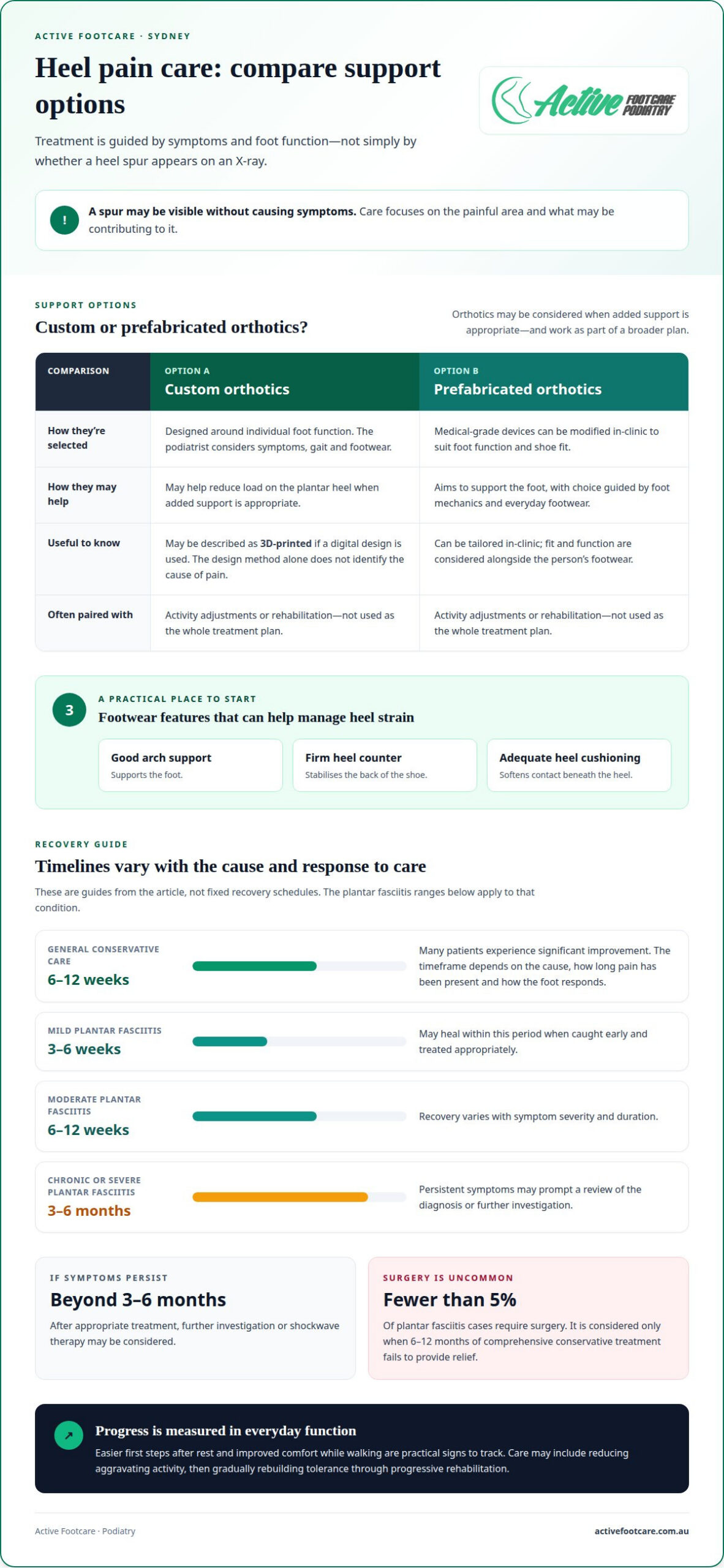
Many patients experience significant improvement within 6-12 weeks of conservative treatment. That timeframe is a guide, not a fixed recovery schedule. The treatment plan depends on what triggers the heel pain, how long it has been present, and how the foot responds to changes in loading. A spur seen on an X-ray may not be the main source of symptoms, so care focuses on the painful area and its causes.
Conservative care can start without orthotics or medication. A podiatrist may suggest reducing activities that aggravate the heel, then gradually rebuilding tolerance through progressive rehabilitation. For example, if long walks bring on pain, temporarily reduce the distance and increase it as symptoms allow. Advice on stretching, strengthening, ice or heat may also be part of the plan. The aim is to manage strain while keeping useful movement in your routine.
Footwear is another practical place to start. Supportive shoes should have good arch support, a firm heel counter and adequate heel cushioning. A podiatrist can assess how your shoes fit and function, then explain whether a change may reduce pressure when you stand or walk. Footwear advice can complement activity changes without immediately requiring orthotics.
If added support is appropriate, custom orthotics are designed around individual foot function and may help reduce load on the plantar heel. A podiatrist considers the person’s symptoms, gait and footwear when choosing the device and its fit. Custom orthoses may also be described as 3D-printed when a digital design is used in their manufacture. The design method is separate from the clinical assessment; it does not identify the cause of pain by itself.
Prefabricated orthotics are another option. Medical-grade devices can be modified in-clinic to suit foot function and shoe fit. Both custom and prefabricated orthotics aim to support the foot, but differ in how they’re selected and tailored. A podiatrist can assess which option suits your foot mechanics and everyday footwear. Orthotics work best as one part of a plan, alongside activity adjustments or rehabilitation.
Progress is tracked through practical changes, such as easier first steps after rest or improved comfort during walking. If heel pain persists despite appropriate care, the podiatrist may review the diagnosis and next steps. For persistent symptoms beyond 3-6 months of treatment, further investigation or shockwave therapy may be considered. Treatment focuses on relieving symptoms, not simply removing a spur.
Plantar fasciitis symptoms and treatment
Plantar fasciitis and heel spurs can occur together, but they are different conditions. Symptoms, foot function and the likely cause all help guide assessment and care.
Plantar fasciitis often causes pain beneath the middle or inner heel, particularly when bearing weight. The first steps after waking, or standing after sitting, may feel stiff or sore. Adults commonly feel pain at the heel, while children may notice it through the arch. A podiatrist may also assess the Achilles tendon, mobility and strength, as these factors help build a fuller picture.
Conservative care and surgery
Care commonly starts with activity modification and progressive rehabilitation, with exercises selected to build strength and mobility. A treatment plan may also include footwear guidance, orthotics, and advice about stretching, ice or heat. These approaches target symptoms and loading rather than removing a heel spur. Fewer than 5% of plantar fasciitis cases require surgery.
Surgery is considered only when 6-12 months of comprehensive conservative treatment fails to provide relief. Before that point, persistent symptoms may prompt a review of the diagnosis or further investigation. The decision involves the duration and effect of pain, previous care, and whether other causes need attention.
Heel spur diagnosis and care
A heel spur may show up on an X-ray without causing symptoms. In Sydney, a podiatrist may use X-rays to confirm a spur and rule out other possible causes of heel pain. Assessment may also consider training load, footwear, gait, running technique, mobility and general health.
If plantar fasciitis is suspected, assessment may include referral for ultrasound or MRI. Ultrasound may be recommended if a plantar fascia tear is suspected, while MRI may help investigate other concerns. A slump test can help assess whether nerve-related pain is a factor. These steps can help distinguish plantar fascia symptoms from other sources, including problems affecting the Achilles tendon.
Recovery and treatment timelines
Recovery varies with symptom severity and duration. Mild plantar fasciitis caught early may take 3 to 6 weeks to heal with proper treatment. Moderate cases may take 6 to 12 weeks, while chronic or severe cases may take 3 to 6 months.
Track progress through everyday changes, such as less pain on your morning steps or greater tolerance for standing. General foot care, including toenail care, supports comfort but does not treat plantar fascia pain. If heel symptoms persist, reassessment can help determine whether your plan needs adjusting or further investigation.
Footwear, foot mechanics and activity-related loading
Heel discomfort can reflect the combined effects of footwear, foot mechanics and daily activity. A change in walking routine, prolonged standing at work or different-fitting shoes may alter how force travels through the foot. These factors don’t prove a heel spur is causing pain, but can help explain what contributes to it. A useful assessment considers when symptoms occur and what has changed.
Supportive footwear for heel pain should provide good arch support, a firm heel counter and adequate heel cushioning. Arch support helps support the foot, the heel counter stabilises the back of the shoe, and cushioning softens contact beneath the heel. A podiatrist can review the shoes you wear for work, walking and exercise, then discuss how their fit and structure relate to your symptoms.
Notice how your shoes feel during specific activities. Does heel discomfort build during a long period of standing, a walk on hard surfaces or exercise? A shoe that feels comfortable while sitting may feel different after an extended walk. Fit and wear matter too: a loose heel or compressed cushioning can change how your foot sits and moves inside the shoe.
Foot mechanics describe how your foot and lower limb move while standing and walking. A podiatrist may observe your gait, compare how each foot moves, and assess mobility and strength. The aim is to understand whether a movement pattern or reduced mobility may be adding to heel load. Findings are considered alongside your symptoms, activity and footwear, rather than treated as an explanation on their own.
Changes in activity can affect heel loading too. A sudden return to longer walks, more time on your feet or a new running routine may leave your foot less time to adapt. Discuss which activities bring on symptoms and how often they occur. A care plan can then guide activity adjustments and progressive rehabilitation, helping you stay active while managing the demands on your heel.
Practical steps to discuss during an assessment include:
- Bring the shoes you use most for work, walking or exercise, so their fit can be considered.
- Describe a recent change in activity, such as longer walks or increased standing.
- Explain when discomfort starts, where you feel it, and which movements make it worse.
Together, these details help connect footwear and mechanics with everyday loading. The aim is to identify relevant contributing factors and choose useful adjustments, rather than assume that one shoe or movement explains every case.
Appointment booking
Booking a heel-pain appointment is a practical first step towards understanding the cause. Details about your symptoms help shape the assessment, including when the pain began and which activities affect your comfort. Note whether discomfort starts while walking, standing or taking your first steps after rest. This gives the podiatrist a useful starting point for discussing diagnosis and care.
Before your appointment, briefly record changes that may be relevant, such as increased exercise, different footwear or a shift in your daily routine. Bring the shoes you wear most often if footwear or walking mechanics are part of the concern. If you’ve had imaging or treatment, bring those details too, so the podiatrist can understand what has already been considered.
Describe where the pain is and how it behaves. Explain whether it feels sharp, aching or tender, and whether it eases or builds during activity. Mention any effect on sleep, work or walking. These details help the podiatrist assess your symptoms alongside foot movement, tissue tenderness and health history.
Appointment instructions may ask patients to arrive 10-15 minutes early to complete personal and health details forms. Allowing that time can help you settle in and provide information before the consultation begins. Include relevant medication and health details on the forms, as these may help inform assessment and treatment decisions.
In Australia, eligible patients may receive a Medicare contribution towards podiatry consultation costs when their GP has prepared a Chronic Condition Management Plan. Private health insurance may also provide a rebate, depending on your level of cover. Eligibility and cover differ, so have your plan details available when discussing appointment arrangements.
Booking is also a chance to explain any access needs. Let the clinic know if heel pain makes walking difficult or if standing for long periods affects your comfort. This helps the appointment take your circumstances into account and supports a focused discussion of assessment and next steps.
To make the consultation more useful, prepare these details:
- When the heel pain began and whether it has changed.
- Which activities, such as walking or exercise, bring on symptoms.
- Footwear you use regularly and any recent changes.
- Previous investigations, treatment, or relevant health information.
A podiatry appointment is for assessment and care planning, not an automatic decision about surgery. The discussion may consider your symptoms, foot mechanics and possible contributing factors before outlining suitable next steps. Specific examples can help distinguish what affects your heel from unrelated concerns, such as a toenail problem.
Sydney podiatrist heel spur clinic locations and opening hours
For heel pain in Sydney, location and appointment timing affect how easily care fits your routine. Start by considering the trip you can manage comfortably, especially if walking or standing increases your symptoms. Someone travelling from the Inner West, for example, may prioritise a convenient route over a clinic that adds unnecessary travel. A shorter, more manageable journey can make attending follow-up appointments easier.
Opening hours matter, but a clinic’s general business hours and available appointment times may differ. Check appointment information for days and times that suit your work, caring responsibilities or exercise routine. If your first steps in the morning are particularly painful, consider how travelling to an early appointment may feel. Planning ahead can reduce avoidable strain on the day.
Think about access from the entrance to the appointment room. If heel pain affects walking, stairs, prolonged standing or carrying bags, these details may influence which location feels manageable. For example, if you use a walking aid, consider the entry and route to the appointment. Include these needs when arranging care.
Before choosing a time, map the journey from home or work. Consider your usual transport and how far you can comfortably walk. A longer trip may be harder after a full workday, while a nearby appointment may fit more easily between other commitments. These are practical planning considerations, not measures of how serious your heel problem is.
Keep the purpose of the appointment in view: assessing heel symptoms and discussing appropriate care, not simply confirming a spur. Allow time to arrive, explain what triggers the pain and discuss how it affects daily movement. Bring any footwear or imaging details relevant to your symptoms.
Use this simple planning sequence:
- Choose a Sydney location that suits your usual travel route and walking tolerance.
- Find an appointment time that fits your daily commitments and comfort.
- Plan the journey, including any stairs, longer walks or waiting periods.
- Set aside time to describe symptoms and discuss next steps.
For people whose heel pain makes travel difficult, a home-based appointment may be a more practical care format. The right setting is the one that allows a clear discussion of symptoms and foot function without adding unnecessary strain. Arrange a Sydney podiatry appointment to discuss care in a setting that suits your needs.
Choose care in Sydney that suits your travel route, walking tolerance and access needs. Check appointment information for days and times that fit your routine, as general business hours may differ from available appointments.
Active Foot Care: Podiatrist Home Visit
Active Foot Care offers Podiatrist Home Visit care if heel pain makes travelling to an appointment difficult. A podiatrist can assess your symptoms and foot function at home, then discuss practical next steps based on your needs. This may include Custom Orthotics or Gait Analysis as part of your care.
A home visit may suit you if walking, transport or daily responsibilities make clinic attendance challenging. Your usual footwear can also be considered alongside your symptoms. If you need a Diabetes Foot Assessment or NDIS Podiatry Services, you can discuss these options with Active Foot Care.
Contact Active Foot Care to discuss whether a Podiatrist Home Visit may suit your heel pain and circumstances.
Take the next step towards comfortable movement
Persistent heel pain can affect how confidently you move through work, errands and time outdoors. Have your symptoms considered alongside your daily needs, including travel, health concerns and the footwear you rely on. If you’re looking for a podiatrist for heel spurs near me in Sydney, care should begin by understanding what may be driving the discomfort, rather than assuming the spur explains every symptom.
Active Foot Care can provide a Podiatrist Home Visit when getting to an appointment is difficult. A Diabetes Foot Assessment may be relevant if you’re managing diabetes, while Custom Orthotics can be considered when added support suits your assessment. These options shape care around the person, not just an X-ray finding.
Taking action doesn’t mean committing to a particular treatment. It gives you space to explain what’s changing, ask about suitable care and decide on a practical way forward. For supportive guidance with heel pain, contact Active Foot Care. A clear first conversation can help you take your next steps with greater confidence.
Frequently Asked Questions
Why isn’t my heel pain healing?
Heel pain can persist if the underlying cause hasn’t been addressed or everyday activity continues to irritate the area. Plantar fascia pain, footwear, walking patterns and long periods of standing can all affect symptoms. A heel spur on an X-ray may not be the main source of pain. If discomfort is unchanged, worsening or limiting everyday movement, a podiatrist can reassess the likely cause and your current care plan.
Can I claim Medicare or private health insurance?
Some eligible patients can receive a Medicare contribution towards podiatry consultation costs if their GP has prepared a Chronic Condition Management Plan. Private health insurance may also provide a rebate, depending on your level of cover. Eligibility differs between these options. Before your appointment, review your plan documents and bring relevant details to discuss how the consultation may fit your circumstances.
Do you need a referral?
You can generally book directly with a podiatrist without a GP referral. A GP-prepared Chronic Condition Management Plan is relevant if you’re eligible for a Medicare contribution towards podiatry consultation costs, and is not the same as a general referral. If a GP or another health professional has assessed your heel, sharing their notes or investigation results can help inform the podiatry assessment.
Need Help With Foot or Lower Limb Pain?
Active Foot Care provides podiatry for foot pain and mobility concerns, including heel symptoms that affect walking or daily activities. Depending on your needs, care may involve a Podiatrist Home Visit, Gait Analysis or Custom Orthotics. If you’re managing diabetes, you can also ask about a Diabetes Foot Assessment. An assessment connects your symptoms with practical care options instead of assuming every case of heel pain has the same cause.
What Are Heel Spurs?
A heel spur is a bony projection associated with the heel bone, which may be identified on an X-ray. Its presence doesn’t automatically mean it’s causing pain. Heel spurs often occur alongside plantar fasciitis, but these are different conditions. Assessment considers the location and pattern of symptoms as well as imaging, helping distinguish a visible spur from the tissue or movement factors contributing to discomfort.
What if I have already tried treatment?
Tell the podiatrist what you’ve tried, how consistently you used it and what changed, even if relief was brief. Note whether an orthotic felt comfortable, whether exercises affected symptoms or whether pain returned after increasing activity. This helps identify what may need adjusting. Persistent pain may also prompt a fresh look at the diagnosis and whether further investigation is appropriate.
Podiatrists treating heel spurs near me in Sydney
For a local assessment, Active Foot Care serves Liverpool, Bankstown, Moorebank, Sydney and Campbelltown. A podiatrist can assess your heel symptoms and discuss care suited to your needs. If travel is difficult, a Podiatrist Home Visit may be a practical option. Contact Active Foot Care to discuss your appointment and explain any mobility or access needs.
Heel spur treatment options offered by Sydney podiatrists
Options depend on the symptoms and assessment findings. Care may include activity guidance, rehabilitation, footwear advice and orthotic support. Active Foot Care also offers Shockwave Therapy and Prolotherapy Injections. Prolotherapy uses a specialised dextrose solution with a concentration ranging between 12.5% and 25%, plus a local anaesthetic, usually lignocaine. These approaches form part of a broader care plan, rather than treating an X-ray finding alone.
Cost of podiatrist consultation for heel spurs in Sydney