

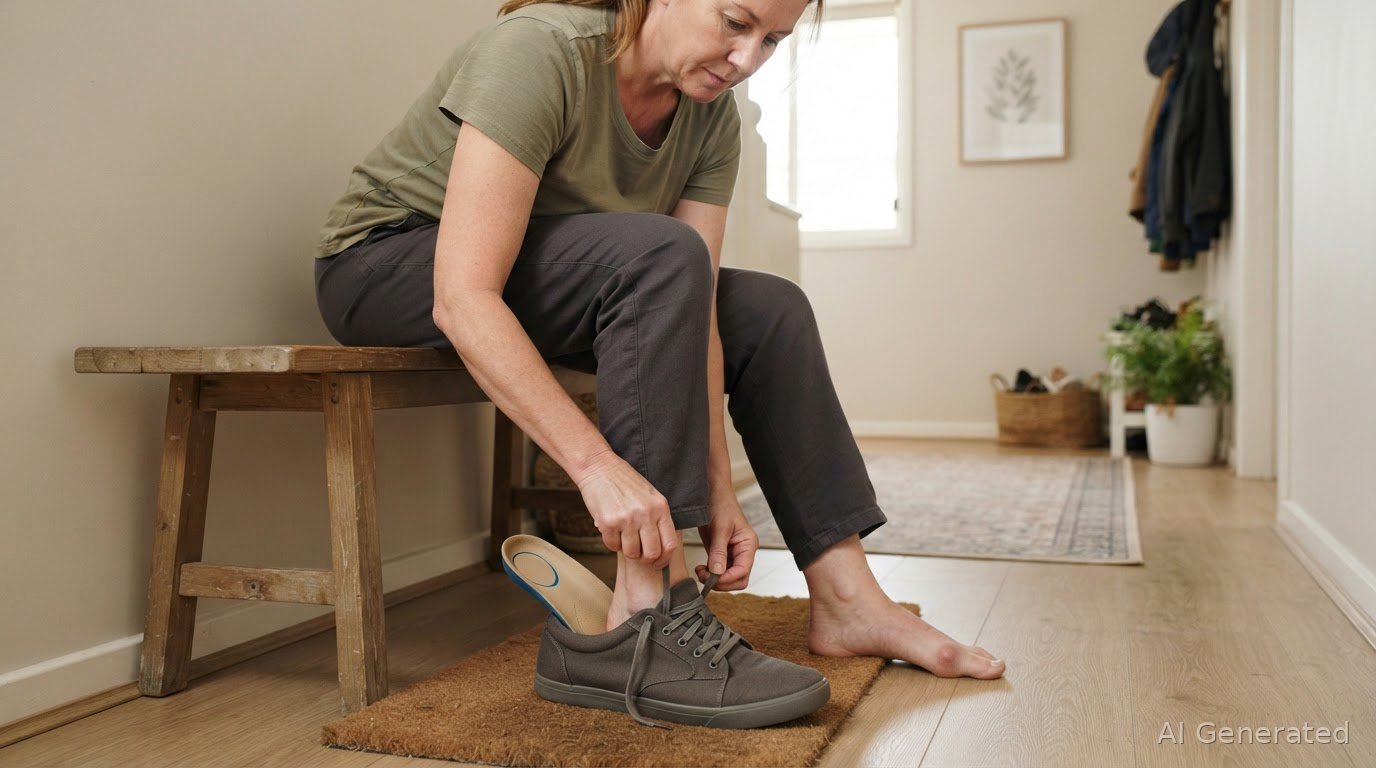
Non-surgical care can ease bunion symptoms, but it usually won’t reverse the toe’s deformity. For people seeking non-surgical bunion treatment in Moorebank, the aim is to reduce pressure and irritation, support foot function and manage pain. Surgery may be considered if pain is severe, affects daily activities or hasn’t improved with conservative care.
It’s understandable to hope that changing shoes or using a splint will make a bunion disappear. These steps can improve comfort, especially when footwear causes rubbing, but they can’t guarantee the bunion will stop progressing or correct its shape.
This guide explains how footwear, inherited traits and foot mechanics can influence bunions, which conservative options may help and where their limits lie. You’ll also learn what a podiatry assessment can consider and when surgery may be discussed, giving you a clearer picture of what treatment can realistically achieve.
Key Takeaways
- Learn how inherited traits and foot mechanics can contribute to bunions, and why footwear is only one part of the picture.
- Explore practical ways to ease pressure and irritation at home, including choosing roomier footwear.
- Understand how orthotics, pads and exercises may support comfort and function without correcting the bunion’s shape.
- Recognise when persistent pain or difficulty with daily activities may make a surgical discussion appropriate.
- See what a podiatry assessment can consider when matching conservative care to your symptoms and walking mechanics.
Footwear, inherited traits and biomechanical causes
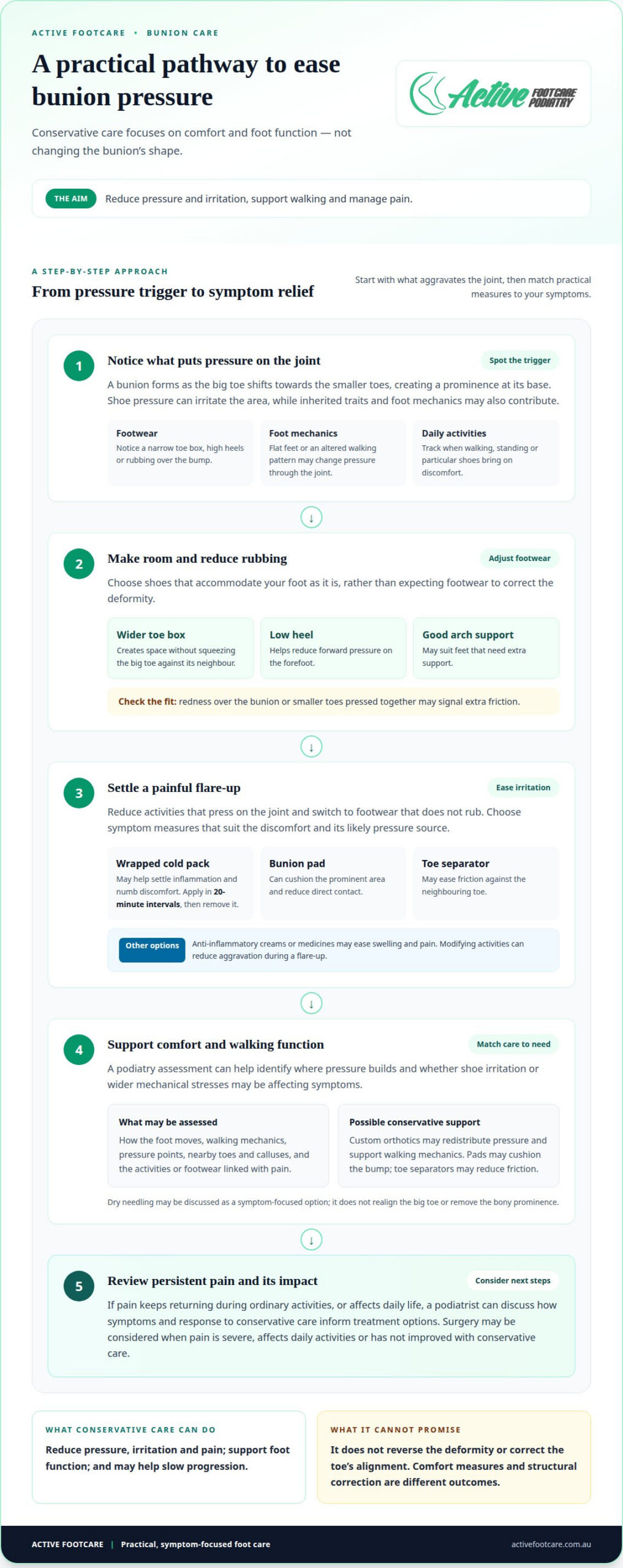
A bunion develops as the big toe shifts towards the smaller toes, creating a prominence at its base. Footwear, inherited traits and foot mechanics can all contribute, so there isn’t always just one cause.
Lifestyle and footwear considerations
Notice where shoes press during everyday activities, such as walking to work or standing for long periods. A narrow toe box or high heel can increase pressure and rubbing over the bunion, irritating nearby tissue. Wider footwear with a low heel and good arch support can reduce direct contact. These changes may improve comfort, but they don’t correct the toe’s alignment.
Inherited and biomechanical factors
A family history of bunions is common, suggesting an inherited contribution. Foot mechanics can also matter: flat feet or an altered walking pattern may change how pressure travels through the big toe joint. An assessment considers how the foot moves, where pressure builds and whether nearby toes or calluses are affected. These details help distinguish shoe irritation from wider mechanical stresses.
Footwear isn’t established as the sole cause of bunions, although tight, pointed shoes can worsen pressure and discomfort. Check your shoes practically: does the forefoot have room, does the upper rub the bump, and does the heel height shift your weight forwards? A wider toe box creates space without squeezing the big toe against its neighbour.
Choose shoes that accommodate your foot as it is, rather than expecting footwear to correct the deformity. Low heels reduce forward pressure, while arch support may suit feet that need extra support. If a shoe leaves redness over the bunion or presses the smaller toes together, it may be increasing friction. Different shoes can feel different during daily activities, so note which situations trigger pressure.
These factors also matter if surgery is considered. A bunionectomy realigns bones, ligaments and tendons, but post-operative footwear is part of recovery. Patients can typically walk immediately in a special post-operative shoe. Activity is limited during the first week, and the first review and dressing change take place after 7 days. By 2 weeks, the bulky dressing is replaced with a small dressing; most patients return to normal footwear after 3 to 4 weeks, although healing varies.
Unlike surgery, non-invasive care focuses on reducing shoe pressure and irritation. Keeping track of the footwear and activities linked with pain can help clarify which factors affect comfort and function.
Why Choose Non-Surgical Bunion Treatment?
Conservative care can reduce pressure, irritation and pain without an operation. Its focus is symptom relief and function, rather than changing the bunion’s structure.
At-home bunion pain relief
During a painful flare-up, reduce activities that press on the joint and switch to footwear that doesn’t rub. A wrapped cold pack may help settle inflammation and numb discomfort; apply it in 20-minute intervals, then remove it. A bunion pad can cushion the prominent area, while a toe separator may ease friction against the next toe.
These steps aim to make walking and wearing shoes more comfortable, but they don’t correct the underlying deformity. If pain keeps returning during ordinary activities, note which movement or shoe triggers it. That information helps a podiatrist assess pressure points and discuss suitable options.
Managing inflammation and pain
Anti-inflammatory creams or medicines may ease swelling and pain, while modifying activities can reduce aggravation during a flare-up. A cold pack is another option for short-term symptom management. Choose measures according to your discomfort and the pressure causing it, rather than expecting one approach to address every cause.
Dry needling may be raised as a symptom-focused option, but it doesn’t realign the big toe or remove the bony prominence. When compensatory walking patterns create tension in the lower leg and foot, remedial bodywork from Body Therapist can assist in easing soft-tissue tightness. A podiatrist can consider whether it fits alongside other care, based on your symptoms and treatment goals. Pain relief and correction of the bunion are different outcomes.
Treatment costs and local podiatrists
Medicare doesn’t provide one universal answer for every bunion treatment. Eligibility depends on the circumstances and service, while private health insurance cover depends on the policy and its benefits. Review the relevant eligibility criteria or policy terms to understand what applies to you.
For care near Moorebank, look for a podiatrist who assesses shoe pressure, walking mechanics and symptoms before discussing non-surgical options. That assessment can help distinguish irritation from mechanical factors and shape a practical plan. A home visit may also suit people whose mobility or circumstances make travelling to an appointment difficult.
Conservative care can help manage discomfort while you weigh your options. Surgery may relieve bunion pain, but it involves recovery and doesn’t guarantee the deformity won’t return. A podiatrist can explain how symptom severity, daily activity and response to non-surgical measures inform a surgical discussion.
Can conservative treatment stop a bunion getting worse?
Conservative care can manage bunion symptoms and reduce stress through the big toe joint. It may help slow progression, but it doesn’t reverse the deformity.
Symptom management without surgery
A bunion, also called hallux valgus, forms as the big toe shifts towards the smaller toes, creating a bump at its base. Pain, swelling and difficulty fitting into shoes can follow. A treatment plan focuses on what limits comfort, such as pressure while walking, stiffness in the joint or friction against a neighbouring toe.
Custom orthotics can redistribute pressure and support walking mechanics. Bunion pads may cushion the bump, while a toe separator can reduce friction between toes. Braces and splints may offer some symptom relief, but they are not a way to reliably change the bunion’s underlying structure. These approaches target comfort and function, not structural change to the bunion.
Preventing symptoms from worsening
Supportive footwear, stretching and pressure management can help reduce irritation during daily activities. Toe stretches, for example, may address stiffness, while rolling the foot over a ball offers a simple mobility exercise. A pad can reduce rubbing inside a shoe. These steps address symptoms and mechanical stress, rather than removing the bony prominence.
As a bunion changes, nearby toes may become crowded. Hammertoes affect smaller toes and can occur alongside big-toe deviation. Persistent pressure can also contribute to calluses or pain beneath the forefoot. Notice whether discomfort is changing, such as pain shifting from the bunion to the ball of the foot, and mention these changes during an assessment.
Bunion progression and symptom relief
Bunions can become more painful or stiff over time, although progression varies between people. A podiatrist can assess joint movement, pressure points and walking patterns to identify factors that may be adding stress. Custom orthotics can help address abnormal loading, while exercises and footwear adjustments support everyday function.
Non-steroidal anti-inflammatory medicines, or NSAIDs, can ease bunion-related pain and swelling. Anti-inflammatory creams may also help with local discomfort. These options manage symptoms; they don’t correct the bunion’s alignment. Arthritis can also affect a toe joint, so consider pain or stiffness alongside the visible bump rather than assuming bunion pressure is the only cause. For broader support with systemic joint inflammation and root-cause wellness, consulting providers such as Westridge Holistic medicine can offer a valuable whole-body perspective alongside local foot care.
During an ongoing painful flare, reduce activities that aggravate the joint and choose footwear that doesn’t press on it. A clinic assessment can help distinguish pressure-related symptoms from stiffness or other joint problems. That distinction guides whether conservative care should focus on cushioning, pressure redistribution, mobility or reducing inflammation.
When is bunion surgery necessary?
Surgery is considered when bunion pain is severe, interferes with daily activities or persists despite non-surgical treatment. The decision centres on pain and function, not the appearance of the toe alone.
A bunion develops as the big toe moves out of alignment, with the first metatarsal bone angling outwards and forming a bump. Tight, narrow or pointed shoes can contribute to bunion formation, while sports-related foot stress and rheumatoid arthritis can also play a role. These factors don’t establish one single cause for everyone.
Footwear and foot mechanics may affect pressure around the joint, but research has not established that footwear alone causes bunions. A family history can indicate an inherited contribution. In practice, a clinician considers the toe’s alignment, symptoms and daily demands together, rather than treating one possible risk factor as the whole explanation.
Progression can bring increased pain, stiffness or difficulty with everyday tasks, such as walking or finding comfortable shoes. The key question is how the condition affects your life. Pain that limits work, exercise or routine movement carries more weight in a surgical discussion than a bunion that concerns you only cosmetically.
An assessment considers the bunion’s position, joint movement, pain and effects on nearby toes. A foot X-ray can help assess bone alignment; CT or MRI may also be used to examine bone or soft tissue damage. These investigations clarify the structural problem and inform whether conservative care remains appropriate or surgery should be discussed.
Before surgery is considered, a trial of non-operative treatment is advised, including for people awaiting orthopaedic review or those who don’t want surgery. Options focus on easing symptoms and supporting function. If pain remains severe or daily activities continue to suffer, surgery can be discussed as a way to address the deformity, rather than simply disguise the bump.
A bunionectomy realigns bones, ligaments and tendons to correct the deformity. Its main goal is pain relief; cosmetic concerns alone aren’t an indication for surgery. For people in Moorebank and across Sydney, the decision rests on symptoms, function and response to conservative care, not the bunion’s appearance alone.
Limits of non-surgical bunion treatment
Conservative care targets pressure, irritation and function. It does not correct the bones’ alignment once a bunion has formed. That distinction matters: footwear changes or orthotics can make walking more comfortable, but the visible bump can remain. A realistic treatment goal is better symptom management, not a promise that the toe will return to its former position.
Each option has limits. A bunion pad can reduce rubbing, but it won’t change the joint’s structure. A splint may hold the toe in a different position while worn, yet braces and splints don’t correct the deformity. A toe separator can ease friction between toes temporarily, but it doesn’t remove the underlying cause of pressure.
Custom orthotics are individually manufactured and tailored based on personal assessment, to redistribute pressure and support foot alignment during movement. Their value depends on whether mechanics contribute to symptoms and whether the device suits your shoes and activities. Orthotics can help manage loading, but they don’t realign the bones. A podiatrist’s assessment can identify pressure patterns and determine whether orthotics fit your treatment goal.
Progression is another limit to consider. Conservative care can reduce discomfort and improve function, but it can’t guarantee that a bunion will stop changing. Symptoms may include pain, swelling, stiffness or difficulty fitting into shoes. If pain increasingly restricts walking, work or other daily activities, that change matters more than whether a pad or brace still feels comfortable.
A 2004 Cochrane review found no difference between non-operative management and no treatment for bunions. That finding highlights why expectations should stay grounded: symptom relief is not the same as structural correction. Individual measures still address specific problems, such as shoe friction or altered pressure, but they don’t provide the correction achieved through bunion surgery.
At an appointment, an assessment can review where pain occurs, how the toe moves and whether nearby toes or calluses are affected. A foot X-ray, CT or MRI may help assess bone or soft tissue when imaging is appropriate. These details help clarify whether conservative care still addresses the main problem or whether pain and restricted function warrant discussing surgical options.
Choose the next step according to what limits daily function. If footwear pressure is the main issue, pressure management and orthotics may be relevant. If pain persists despite conservative measures, arrange a clinical assessment to discuss the benefits and limits of each option. Explore podiatry assessment and orthotic care for support with pressure and walking mechanics.
Active Foot Care: Anti-fungal Laser Treatment
Active Foot Care offers Anti-fungal Laser Treatment for fungal nail infections, which are separate from bunion symptoms. It won’t correct a bunion or replace an assessment of toe alignment and pressure. If bunion discomfort affects walking, Custom Orthotics may help manage pressure and support foot mechanics.
A podiatry assessment can help distinguish bunion-related pain from other foot or nail concerns and guide the next step. If travelling is difficult, a Podiatrist Home Visit from Active Foot Care may be a suitable way to access podiatry care in Moorebank and nearby areas.
For guidance on foot or nail concerns, contact Active Foot Care to arrange a podiatry assessment.
Choose a next step that fits your day
Think about the movement you most want to make easier, whether that’s walking to the shops, standing at work or staying comfortable in everyday shoes. For non-surgical bunion treatment in Moorebank, connecting that goal with your symptoms gives a podiatry assessment a practical starting point.
Active Footcare can assess foot mechanics and discuss whether Custom Orthotics may help manage pressure. If travelling to an appointment is difficult, a Podiatrist Home Visit offers another way to access care. A Diabetes Foot Assessment is also available for people with diabetes who need their foot health assessed as part of their care.
You don’t need to decide on surgery before understanding your options. A conversation about your symptoms, daily activities and treatment priorities can help you take the next step with greater confidence.
Contact Active Foot Care to discuss your foot concerns and arrange a suitable next step.
Frequently Asked Questions
How do home exercises help treat a bunion?
Home exercises can support toe and foot mobility and help manage stiffness, but they don’t remove a bunion. Gentle toe stretches or moving the big toe through a comfortable range can support movement; resistance-band exercises may strengthen foot muscles. Stop any movement that increases pain. A podiatrist can tailor exercises to joint mobility and walking demands, particularly if arthritis or marked stiffness affects your routine.
Can orthotics fix a bunion?
No, orthotics don’t correct the bones’ alignment or remove the bunion. They can redistribute pressure through the foot and support walking mechanics, which may help with discomfort during activities such as standing at work. Custom orthotics are designed around an individual assessment, rather than as a structural cure. If an insert causes rubbing or changes where pain occurs, its fit and effect on your movement need reviewing.
Can wider shoes help a bunion?
Yes, wider shoes can reduce pressure and rubbing over the bunion, particularly if the toe area is cramped. Check that the upper doesn’t press on the bump and that your toes have room to rest without being squeezed together. A wider fit can improve comfort while walking, but it won’t realign the big toe. The most useful choice is one that accommodates your foot during the activities that trigger symptoms.
What non-surgical treatments are available for bunions in Moorebank?
For non-surgical bunion treatment in Moorebank, options include footwear changes, cushioning pads, toe separators, exercises and orthotics. A podiatrist can assess pressure points and foot mechanics to guide the approach. Active Footcare offers Custom Orthotics and non-invasive Gait Analysis, an in-depth examination and assessment of the way you walk or run. These services can inform symptom management, with the goal of better comfort and function rather than reversing the bunion.
How much does bunion treatment cost at Moorebank podiatry clinics?
There isn’t one cost that applies to every treatment plan. The price depends on the assessment required, the care discussed and whether custom orthotics are needed; a case-specific price is provided after a quote request. An appointment focused on assessment differs from one involving an individually tailored device. The appropriate plan depends on symptoms, walking mechanics and the treatment options being considered.
Do custom orthotics help relieve bunion pain, and what do they cost near Moorebank?
Custom orthotics can help relieve bunion pain by redistributing pressure and supporting foot mechanics, particularly when walking patterns contribute to discomfort. They don’t correct the bunion’s shape. Their cost depends on the assessment and the individual device required; a case-specific price is provided after a quote request. A podiatry assessment can determine whether orthotics suit your symptoms and everyday footwear.
What bunion-friendly shoes, toe spacers, and splints are recommended by Australian podiatrists?
Look for footwear with a roomy toe area, a low heel and suitable arch support. The shoe should avoid pressing on the bunion while you walk. A toe spacer may reduce friction between the big toe and its neighbour, while a splint can provide symptom relief when worn. Neither device corrects the deformity. Comfort and fit matter: a spacer or splint that increases pressure isn’t serving its purpose.
Can exercises or physiotherapy reduce bunion pain or slow bunion progression?
Exercises can address stiffness and support movement, while physiotherapy may help with mobility and function. Toe stretches, resistance-band exercises and rolling the foot over a ball are examples used for bunion-related stiffness or discomfort. These approaches don’t realign the toe. They may form part of a symptom-management plan, but can’t guarantee a bunion will stop progressing. A podiatrist can match exercises to your symptoms and walking needs.